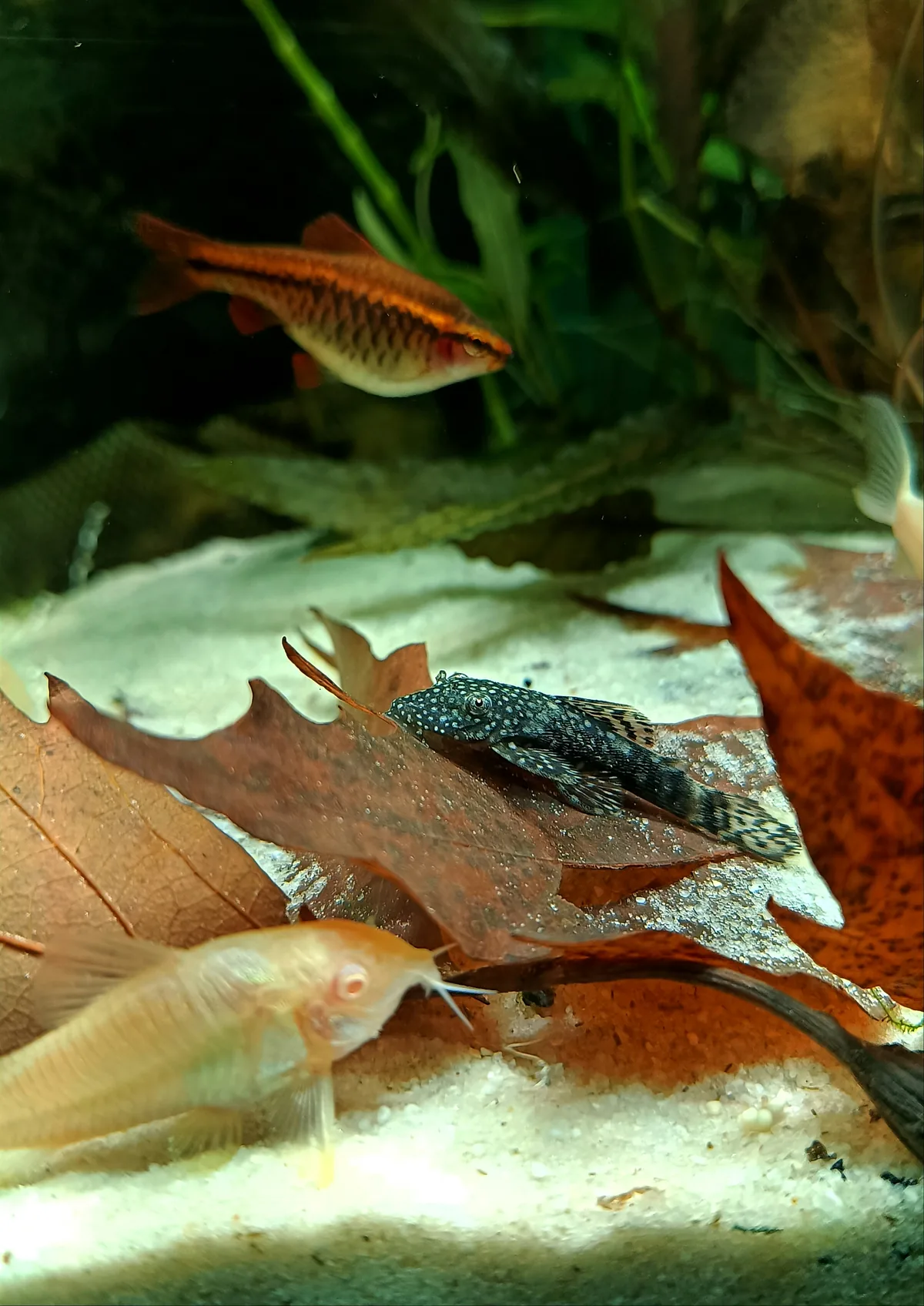
Quick Stats
| Adult Size | 5–6 cm |
| Minimum Tank | 20 gal |
| Temperature | 22–28°C |
| pH Range | 6.0–7.5 |
| Hardness (GH) | 2–12 dGH |
| Difficulty | Easy |
| Temperament | Peaceful, schooling |
| Diet | Omnivore — sinking pellets, frozen bloodworm, brine shrimp, algae wafers |
| Schooling | 6+ required |
Tank Setup
The Sterbai Cory (Corydoras sterbai) is the cory I recommend more than any other — hardy, peaceful, attractive, and unusually tolerant of warmer water. A 20 gallon long (30 × 12 inches) is the realistic minimum for a school of six; they reach 5–6 cm and they forage the substrate in a constant shuffle, so horizontal floor space matters more than water depth. They come from the Guaporé River basin on the Brazil–Bolivia border, where they sift sandy margins for insect larvae, crustaceans, and detritus.
Maintain water parameters within: temperature 22–28°C, pH 6.0–7.5, hardness 2–12 dGH. The wide temperature window is the single biggest reason Sterbai are the default cory for warm-water tanks — most corydoras top out at 26°C and stress above it, but Sterbai are genuinely comfortable at 27–28°C long-term. That makes them the right bottom-dweller for discus tanks, ram tanks, and any South American community running warm. They also tolerate moderately hard tap water without complaint, which is a big part of why they are so beginner-friendly.
Set up the tank with smooth sand (no sharp gravel — they sift it through their gills and rough substrate erodes their barbels), driftwood, and dense planting along the back and sides. Leave open sand in the front for sifting. A sponge filter is plenty; moderate flow from a HOB or canister is fine but avoid strong currents that pin them down. A layer of leaf litter (Indian almond leaves) recreates their natural habitat and grows the infusoria that fry graze on. Lighting can be moderate to bright — they have no strong preference, but dimmer lighting brings out the orange pectoral fins better.
Tank Mates
Sterbai Corys are peaceful, bottom-foraging fish that never bother other species. They are also large enough (5–6 cm) that they are not prey for most community fish, which puts them in the sweet spot that the smaller panda and pygmy corys don't quite reach. That combination — harmless to others, not prey for most — makes them one of the most versatile community bottom-dwellers available.
Compatible tank mates include: other Sterbai Corys (mandatory — they school, and they school with their own species), Ember Tetras, Neon Tetras, Rummy Nose Tetras, Harlequin Rasboras, Bolivian Rams, German Blue Rams, Apistogramma, Kribensis, Otocinclus, Bristlenose Plecos, Nerite Snails, and Cherry Shrimp. They are the standard cory for discus tanks (warm water, peaceful, won't nip discus fins) and for ram breeding tanks. Avoid anything that grows large enough to swallow a 5 cm cory — large cichlids, big catfish, and aggressive species will harass or eat them. Avoid nippy barbs and tiger barbs in general.
Schooling is non-negotiable. Six is the absolute minimum; eight to ten is what I aim for. Like all corydoras they are a true schooling fish, and a group smaller than six will hide constantly, refuse food, and slowly waste away. They need their own species — a single Sterbai in a tank of bronze corys will not thrive. Buy them in a group, ideally from the same source at the same time, and aim for a mix of sexes (you can tell by the pectoral fins, covered in the Breeding section below). In a proper school they forage openly across the sand bed in a loose shuffle, sifting substrate through their gills and reacting as a unit to any disturbance.
Diet & Feeding
Sterbai Corys are omnivores that spend their day sifting sand for insect larvae, small crustaceans, and organic detritus. In the aquarium they accept sinking pellets, frozen bloodworms, frozen brine shrimp, live blackworms, and algae wafers. They are not fussy eaters, which is half the reason they are beginner-friendly — the other half is that they are tough enough to recover from a beginner's mistakes.
Feed small amounts twice daily. Sinking pellets (I use Hikari Sinking Wafers and Omega One Shrimp & Lobster Pellets) dropped in after lights-out reach them reliably. Twice-a-week frozen bloodworms or brine shrimp conditions them for spawning and keeps the iridescent spotting along their flanks bright. Algae wafers round out the diet and give them something to rasp on between feedings. A flake-only diet works for survival but the fish lose condition over months — barbel erosion is the classic sign of poor diet and rough substrate, and Sterbai are no exception to that rule.
They are bottom feeders, so target-feed with sinking foods rather than relying on leftovers from surface-feeding tetras. In a community tank, the midwater fish will eat most of the flake food at the surface before it sinks, and the corys will go hungry without targeted feeding. Use a piece of rigid tubing or a turkey baster to deliver frozen food directly to the substrate where they forage. They will also pick at biofilm and detritus, which makes them a useful cleanup fish — but they will not eat algae off the glass. That is a snail or Otocinclus job.
Common Health Issues
Sterbai Corys are hardy once established, but they are scaleless-ish fish with sensitive barbels — which makes them vulnerable to two specific problems: barbel erosion from sharp substrate and bacterial infection from poor water quality. The single biggest health issue I see is eroded barbels from keeping them on rough gravel; switch to sand and the barbels regrow within a month. The second is red blotches on the belly, which is a bacterial infection almost always caused by dirty substrate — vacuum the sand weekly.
Like all corydoras they are susceptible to ich when stressed by temperature swings, but they are also sensitive to many medications. Copper-based treatments and formalin-heavy medications are toxic at standard doses — dose at 50–75% of label rate or use malachite green-free alternatives specifically labelled safe for scaleless fish. Salt is also rough on corys; if you must treat with salt, use half-strength and only for a few days. Heat treatment for ich (raising to 30°C for 10 days) works well for Sterbai specifically because they tolerate warm water that would stress other corys.
Prevention is straightforward: stable temperature (24–26°C is the sweet spot for a community tank, 27–28°C if you're keeping them with discus), weekly 25% water changes with dechlorinated water, smooth sand substrate, and quarantine new fish for two weeks before adding them. Sterbai typically live 5–7 years in good conditions, with the upper end coming from cooler tanks (22–24°C) and pristine water. The single best thing you can do for them is commit to sand — it is not optional for this fish.
Breeding
Sterbai Corys are egg-scatterers and breed readily in a mature tank — often without any intervention. Sexing is the easy part: males have bright orange pectoral fins, females have paler orange or yellowish pectorals. Females are also noticeably wider and deeper-bodied, especially when viewed from above. This sexual dimorphism is one of the things that makes Sterbai so popular — you can sex them at a glance, which is unusual for corydoras.
Condition a group with frozen bloodworms and live blackworms for a week, then trigger a spawn with a cool (20°C) 50% water change the morning after a warm day. Spawning happens in T-position — the female cups her pelvic fins together, releases 2–6 eggs into the basket she forms, the male fertilises them, and she carries them to a clean surface (glass, plant leaf, driftwood) and sticks them there. A group of six can produce 40–100 eggs across a morning. Adults rarely eat eggs if well-fed, but for higher fry survival move the eggs to a separate container with an air-driven sponge filter.
Eggs hatch in 3–5 days at 25°C. Feed the fry infusoria or commercially-prepared liquid fry food for the first three days, then graduate to microworms or newly-hatched baby brine shrimp. Sterbai fry are slightly larger than pygmy cory fry at hatch and grow steadily, reaching 1.5 cm in about six weeks and joining the adult school at around three months. Sterbai are one of the easier egg-layers to breed in captivity — they spawn readily, the fry are reasonably robust, and they are commercially bred in large numbers across Florida and Southeast Asia. There is no reason to ever buy wild-caught Sterbai when captive-bred are widely available and acclimatise far better.
Frequently Asked Questions
What size tank do Sterbai Corys need?
A minimum of 20 gallons for a school of 6–8. Sterbai corys reach 5–6 cm and are active bottom foragers — they need horizontal floor space more than water depth. A 20 gallon long (30 × 12 inches) is the realistic sweet spot; a 15 gallon works for a tight school of six but leaves little room for tank mates.
Why are my male Sterbai Cory's pectoral fins orange?
That is sexual dimorphism — male Sterbai corys have bright orange pectoral fins, while females have paler, more washed-out orange or yellowish fins. If you see bright orange pectorals, you are looking at a male. Females are also noticeably wider and deeper-bodied, especially when viewed from above.
Can Sterbai Corys live with discus and rams?
Yes — Sterbai are one of the few corydoras that genuinely tolerate warmer water (up to 28°C), which is why they are the default cory for discus and ram tanks. Most other corys top out at 26°C and stress at higher temperatures. Sterbai are comfortable at 27–28°C long-term, which makes them the perfect bottom-dweller for warm South American community tanks.
How many Sterbai Corys should I keep together?
Six is the absolute minimum; 8–10 is better. Like all corydoras, Sterbai are a schooling fish and a group smaller than six will hide constantly, refuse food, and slowly lose condition. In a proper school they forage openly across the sand bed in a loose shuffle, sifting the substrate through their gills and reacting as a group to any disturbance.