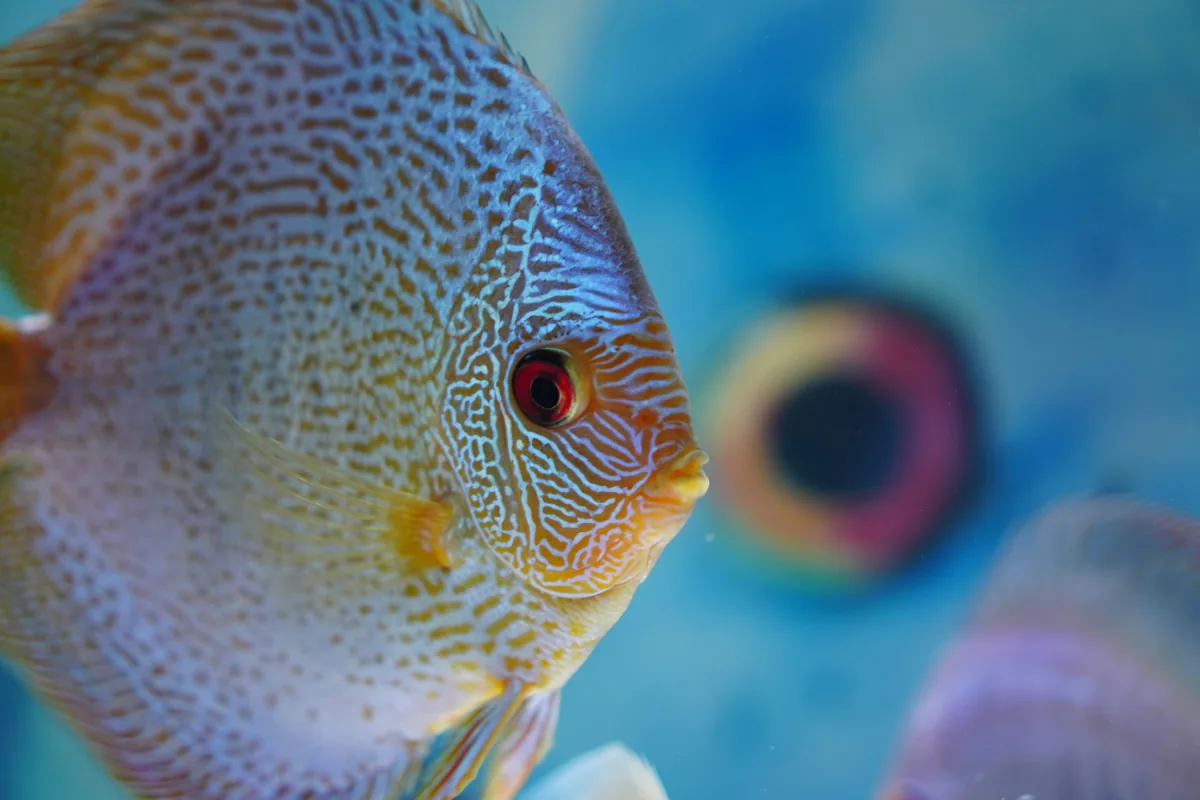
Are Discus Right for You?
Discus are the most visually spectacular freshwater fish in the hobby, and among the most demanding. They require very specific water chemistry, warm temperatures, frequent water changes, and high-quality varied food. If any of these are compromised consistently, discus will develop stress-related diseases quickly.
Honest advice: do not buy discus as your first fish, or even your second. Learn to keep a stable aquarium with forgiving species first. Understand your water parameters and how to maintain them. Once you can do that reliably, discus are a highly rewarding challenge.
Discus are rated as advanced care. They are sensitive to ammonia, nitrite, and nitrate, require specific temperatures most community fish can't tolerate, and need high-protein live or frozen food. Underestimating their requirements leads to rapid health decline.
Water Requirements
| Parameter | Target Range | Notes |
|---|---|---|
| Temperature | 28–31°C | Higher end for breeding |
| pH | 5.5–7.0 | Soft, slightly acidic ideal |
| Hardness (GH) | 1–8 dGH | Soft water preferred |
| Ammonia | 0 ppm | Zero tolerance |
| Nitrite | 0 ppm | Zero tolerance |
| Nitrate | <20 ppm | Lower is better |
The high temperature rules out most community fish — few species thrive above 27°C. Discus are typically kept either alone or in species-specific tanks, or with a small selection of warm-water compatible species. See our community tank guide for stocking principles.
Tank Setup
Discus are tall fish — the body is disc-shaped and can reach 20–25 cm in diameter in adults. The tank needs to be tall enough to allow natural swimming posture. A minimum of 45 cm depth is recommended, with 60 cm preferred. Check your planned setup with our tank calculator. A group of 5–6 discus requires at least 300 litres.
Planted tanks work well with discus, provided the plants can tolerate the temperature. Good choices include Amazon swords, vallisneria, and java fern. Soft substrate (fine sand or Amazonian-style substrate) is preferred over gravel. Driftwood adds tannins that soften water and create the acidic conditions discus thrive in.
Feeding Discus
Discus are carnivorous and require high-protein food. In the wild they consume invertebrates, insect larvae, and small crustaceans. In captivity, feed a combination of:
- Beef heart mix — the classic discus food. High protein, very accepted. Can be home-prepared or bought frozen.
- Bloodworm (frozen or live) — excellent for triggering feeding responses in reluctant fish.
- Discus granules or pellets — high-quality brands like Sera Discus or Hikari Discus provide good daily nutrition.
- Brine shrimp (frozen or live) — nutritious and accepted by virtually all discus.
Feed 2–3 times daily. Remove uneaten food within 10–15 minutes to maintain water quality. Discus that won't eat are almost always experiencing stress — check parameters, check for bullying, and check for internal parasites (common in new fish from importers).
Compatible Tankmates
The temperature requirement is the main filter for compatibility. Species that work with discus include cardinal tetras (which actually prefer warm water), sterbai corydoras (one of few corydoras species comfortable at 28–30°C), ram cichlids (German blue rams, not Bolivian), small dwarf cichlids, and rummy-nose tetras.
Avoid: any fish that prefers temperatures below 24°C, goldfish, large cichlids that will outcompete discus for food, and anything small enough to be stressed by the discus's size.
Disease and Health
Discus are prone to several conditions, most of which are triggered or worsened by poor water quality or stress: hole-in-head disease (HITH), hexamita (internal parasite), and bacterial infections. New discus should be quarantined for at least 3–4 weeks before introduction to an established tank.
The most common sign of illness in discus is darkening of colour — a normally vivid fish turning dark or grey is almost always under stress or unwell. Clamped fins, loss of appetite, and dark vertical bars (beyond the normal 9 bars all discus have) are further warning signs.
Breeding Basics
Discus are monogamous pair-bonding cichlids. A compatible pair will clean a flat surface (a leaf, a piece of slate, the filter intake) and lay 200–400 eggs. Both parents guard and fan the eggs. After hatching, the fry feed on a nutritious mucus secreted from the parents' skin — a remarkable behaviour unique to discus. Breeding discus in a community tank is very difficult; a dedicated breeding pair tank is standard practice.
Common Mistakes
- Keeping at too low a temperature. Below 27°C, discus are more susceptible to bacterial infections and parasites.
- Infrequent water changes. Discus produce a lot of waste for their size. 25–30% water changes every 2–3 days are typical in heavily stocked discus tanks.
- Mixing with inappropriate tankmates. Community fish that prefer cooler water are stressed by discus temperatures.
- Skipping quarantine. Wild-caught and imported discus often carry parasites. Quarantine is not optional.
The honest cost of keeping discus
I’ll be straight with you: I don’t keep discus myself, and the reason is exactly the thing most care sheets gloss over. Discus demand stable, warm water — around 28–30°C (82–86°F) — held consistently, plus pristine quality that usually means large, frequent water changes. They are not a fish you keep casually.
In a extended power cuts environment that temperature requirement is a real commitment, not a footnote. Holding 28–30°C reliably means a quality heater and, realistically, a plan for keeping the tank warm and the filter alive through outages. That ongoing cost — in electricity, equipment and attention — is the part beginners underestimate.
None of this means you shouldn’t keep discus. It means going in with your eyes open: a heated, generously-sized tank (these are tall, social fish that want a group and swimming room), a serious water-change routine, and the willingness to keep conditions stable. If that sounds like more than you want to take on right now, it’s far better to know before buying a fish that can cost as much as the tank it lives in.
Why discus are kept in groups
Discus are shoaling cichlids with a real pecking order. Kept singly or as a single pair they’re often stressed or bullied; a group of five or six spreads aggression out and settles them. That group size, combined with their adult body size, is why discus need more tank than people expect — plan around the group, not the individual fish.