Quick Stats
| Adult Size | 10–15 cm |
| Minimum Tank | 20 gal |
| Temperature | 23–27°C |
| pH Range | 6.5–7.5 |
| Hardness (GH) | 2–20 dGH |
| Difficulty | Easy |
| Temperament | Peaceful |
| Diet | Herbivore/Omnivore — algae wafers, blanched vegetables, driftwood, sinking pellets |
| Schooling | Keep alone or in male/female pairs |
Tank Setup
The Bristlenose Pleco (Ancistrus sp.) needs a minimum of 20 gallons — and the footprint matters more than the height. An adult reaches 10–15 cm and spends its whole life attached to surfaces, so a 20 gal long (76×30 cm footprint) is a far better home than a 20 gal tall of the same volume. Bristlenose also produce a lot of solid waste for their size, so a cycled filter with real mechanical capacity matters more than it does for a shoal of tetras. Run your dimensions through the tank calculator to see what you are actually working with.
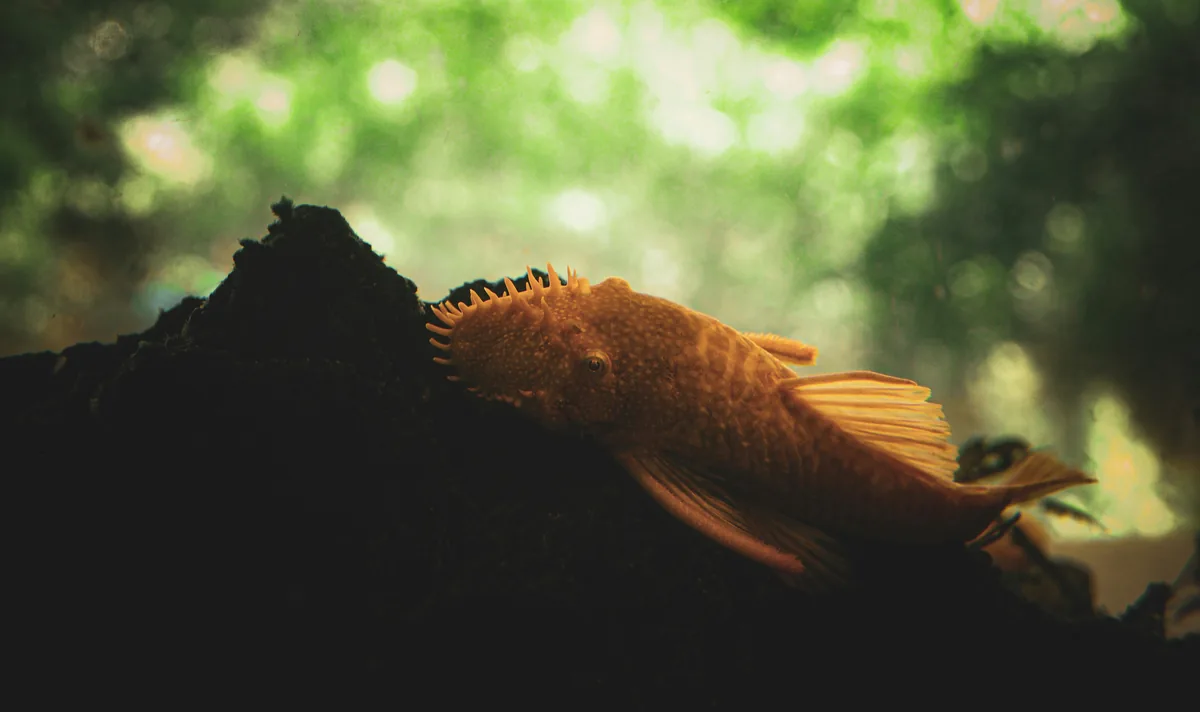
Water parameters are forgiving: 23–27°C, pH 6.5–7.5, GH 2–20 dGH. They come from flowing tributaries, so they appreciate well-oxygenated water and some current — a spray bar or a filter outlet aimed along the glass will do. The one piece of equipment that is genuinely non-negotiable is driftwood. Bristlenose rasp at wood constantly: the biofilm on it is food, and the wood itself aids their digestion. A tank with no wood is the single most common setup mistake for this species.
Give each adult male a cave — a clay cave, half a terracotta pot, or a driftwood hollow — and provide sand or fine rounded gravel they can sift through. Sharp quartz gravel is a poor choice for a fish that spends its day pressed against the substrate. Because they are mostly nocturnal, dense plants, overhangs, or a dim corner give them somewhere to spend the daylight hours without stress.
Tank Mates
Bristlenose are genuinely peaceful toward mid-water fish, which makes them a staple of community tanks. The two real rules concern their own kind: keep one adult male per cave cluster (males squabble over territory, and the loser gets driven off his spawning site), and don't house them with a common pleco or other large loricariid — two bottom-dwelling territorial grazers in one tank is one too many.
Good partners are anything small and peaceful that lives above the substrate: ember tetras and harlequin rasboras in the mid-water, pygmy or bronze corydoras on the bottom (they ignore each other entirely), cherry shrimp and nerite snails on the glass, and dwarf cichlids such as german blue rams or apistogramma — with one caveat: dwarf cichlids and male bristlenose both want caves, so provide more caves than males of either species.
Avoid large, aggressive species that will claim the whole bottom — oscars and similar big cichlids will eventually damage a bristlenose's fins and plates. Also think twice before adding one to a tank you treat with full-strength medications: bristlenose, like most catfish, tolerate copper and strong dye treatments poorly (see health issues below).
Diet & Feeding
The most common bristlenose mistake is assuming "it's a cleaner — it'll live off the algae." In a new or well-maintained tank there simply isn't enough algae to sustain one, and a bristlenose bought as a cleaner slowly starves over weeks while looking fine from the front. Feed them deliberately: a quality algae or spirulina wafer 3–4 times a week, plus blanched vegetables — zucchini, cucumber, spinach (a slice on a veggie clip overnight is how ours get fed) — removed the next morning. Driftwood rasping supplements all of this.
They are omnivores, not strict herbivores. Some protein helps condition breeders and keeps adults in condition — a sinking shrimp- or krill-based food once or twice a week is enough. Chronic high-protein feeding, though, is the classic route to bloat in this genus. Because they are nocturnal, drop their food after lights-out; the mid-water fish won't strip it before the bristlenose even leaves its cave.
Learn to read the belly: a healthy bristlenose is gently rounded after feeding and flat-but-not-sunken by evening. A sunken belly means it is losing the competition for food; a permanently swollen one means diet or digestion trouble. Adjust portions before you adjust anything else, and read our feeding guide if the whole tank's routine needs work.
Common Health Issues
Two problems dominate real-world bristlenose keeping, and both are husbandry rather than disease: slow starvation in tanks that were never really feeding them, and bloat from a diet that leans too hard on protein. Both are visible in the belly long before anything else goes wrong, which is why the feeding section above is worth more than any medication bottle for this species.
When conditions slip, they do get the standard community diseases — ich shows up as white spots on the plates and fins. Treat in the main tank only with products you have confirmed are catfish-safe: bristlenose tolerate copper and full-strength dye medications (malachite green, formalin) poorly, so dose as you would for scaleless fish or move them to a quarantine tank for the course of the treatment. Our ich treatment guide covers the heat-plus-salt approach that works here.
Otherwise the routine is the same as for any bottom dweller: keep nitrate under ~40 ppm with weekly water changes, keep the current oxygenated, quarantine new arrivals for a few weeks, and don't let the tank go dirty on the theory that a "cleaner fish" prefers it that way — it doesn't.
Breeding
Bristlenose are one of the easiest catfish to breed at home — if the cave situation is right, it mostly happens on its own. The male claims a cave, entices or traps a female inside, and she deposits amber-yellow eggs on the roof; a clutch runs from a few dozen to well over a hundred. Then the interesting part: the male does all the guarding, fanning the eggs and defending the cave, and the female is driven off and has nothing further to do with them. At 24–26°C the eggs hatch in roughly 5–7 days.
The reliable recipe from our fishroom: condition the pair for a couple of weeks with protein plus daily blanched vegetables, then trigger a spawn with a large, slightly cooler water change — the rain-storm signal. Give the male a cave he barely fits into (they prefer a snug entrance they can block with their head), one cave per male. Eggs fungus without the father, so never remove a guarding male from his cave unless you are moving the whole clutch to a hatching container.
Fry are tiny translucent slivers for the first days, then speckle up fast on driftwood biofilm, crushed wafers, and blanched zucchini — a grow-out tank without wood grows them noticeably slower. If you're working with albino or longfin lines, both traits are recessive, so carrier pairings hide in plain sight: our bristlenose genetics calculator predicts the fry morphs from any pairing, and the full breeding guide walks caves, conditioning, egg care and fry raising from our own project.
Frequently Asked Questions
What size tank does a Bristlenose Pleco need?
20 gallons minimum — and choose a long tank over a tall one. Bristlenose live on the bottom surfaces, so horizontal room matters far more than water column height, and their waste output needs a filter with genuine mechanical capacity. A 20 gal long beats a 20 gal tall every time.
How do I tell a male from a female bristlenose?
Look at the snout. Mature males grow the namesake bristles — branched, fleshy tentacles around the nose — while females stay smooth-snouted or carry only small unbranched stubs around the edge of the mouth. Males also develop noticeably broader heads and odontodal "hairs" on their pectoral fins. The difference is obvious from roughly 7–8 cm.
Will a bristlenose keep my tank clean?
It will graze soft algae films and biofilm off glass, wood and leaves — genuinely useful, and the reason they're in so many planted tanks. It will not eat faeces, black beard algae, or green spot algae, and it won't fix green water. Treat any "cleaner" as a fish you still feed deliberately, not as maintenance equipment.
Are Bristlenose Pleco easy to keep?
Yes — they're one of the most forgiving catfish in the hobby, with two conditions: the tank must be cycled, and it must contain driftwood. Get those two right, feed actual food rather than trusting the tank's algae, and they shrug off most beginner mistakes.
What do Bristlenose Pleco eat?
A vegetable-forward omnivore diet: algae/spirulina wafers 3–4 times a week, blanched zucchini, cucumber or spinach, constant access to driftwood, and a protein-based sinking food once or twice a week. Drop food after lights-out — they're nocturnal and the day-shift fish will eat "their" wafers otherwise.
Can Bristlenose Pleco live with other fish?
Yes — they ignore anything that lives above the substrate: tetras, rasboras, livebearers, gouramis, cherry shrimp and snails. The cautions are their own kind (one male per cave cluster), other large plecos (territory collision), and big aggressive cichlids. With dwarf cichlids, supply more caves than there are males of either species.
How big do bristlenose get compared to a common pleco?
Bristlenose stop at 10–15 cm. The common pleco sold alongside them as a similar-looking juvenile reaches 30–45 cm — the reason so many end up rehomed. If you're unsure which one is in the shop tank, check the bristles on mature specimens and ask what the adult size is.