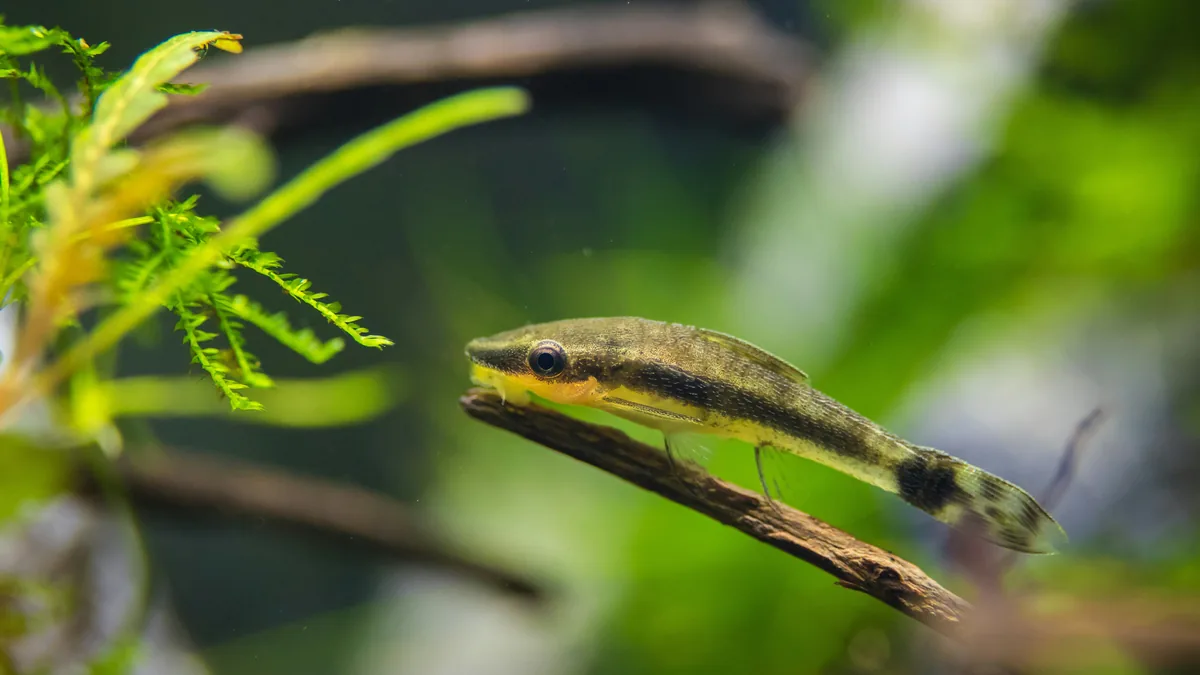
Quick Stats
| Adult Size | 3–4 cm |
| Minimum Tank | 10 gal |
| Temperature | 22–26°C |
| pH Range | 6.0–7.5 |
| Hardness (GH) | 3–12 dGH |
| Difficulty | Medium |
| Temperament | Peaceful, schooling |
| Diet | Herbivore — algae, algae wafers, blanched vegetables (zucchini, spinach) |
| Schooling | 3+ required (must be in groups) |
Tank Setup
The Otocinclus (Otocinclus affinis, along with closely related species like O. vittatus and O. macrospilus that are sold under the same common name) is the peaceful algae eater for nano tanks — small, herbivorous, and genuinely useful in a planted aquarium. The single most important thing to know about Otocinclus is this: do not add them to a freshly-cycled tank. They need an established tank with steady algae growth, because they are obligate herbivores and they will starve to death in a new setup with nothing to graze on. The rule in my fishroom is three months minimum of tank maturity before any Otocinclus goes in.
Maintain water parameters within: temperature 22–26°C, pH 6.0–7.5, hardness 3–12 dGH. They come from clear, well-oxygenated streams across South America and they need clean water — they are sensitive to ammonia, nitrite, and even moderate nitrate in a way that tetras and danios are not. They do not tolerate salt at any concentration, which rules them out of ich-treatment tanks. A mature filter, stable parameters, and weekly 25% water changes are non-negotiable.
Set up the tank with smooth sand or fine rounded gravel, driftwood (which they rasp on for biofilm and fibre), and a mix of hardy plants — Anubias, Java fern, Vallisneria, Amazon swords. The driftwood matters more than people realise: Otocinclus graze on the biofilm that grows on wood, and a tank with no wood is a tank where they will struggle to find enough food. Moderate current is fine — they come from streams — but provide calm refuges with broad plant leaves where they can rest. Avoid bare-bottom tanks entirely; an Otocinclus in a bare tank is a starving Otocinclus.
Tank Mates
Otocinclus are peaceful, mid-to-lower water fish that spend their day rasping algae off every surface they can find. They school loosely — not in the tight formation of tetras, but they absolutely need to be kept in groups. A single Otocinclus is a stressed, hiding Otocinclus; three is the absolute minimum, and six to eight is what I aim for in any tank 20 gallons or larger.
Compatible tank mates include: other Otocinclus (mandatory), Ember Tetras, Neon Tetras, Celestial Pearl Danios, Chili Rasboras, Pygmy Corydoras, Cherry Shrimp, Amano Shrimp, Nerite Snails, and small peaceful cichlids like Apistogramma or Rams in a 20 gallon or larger. They also work as a cleanup crew in a planted Betta tank (10 gallons or more). Avoid housing with anything aggressive, anything that competes for algae (Common Plecos and Bristlenose Plecos will outcompete them), and anything that sees a 3 cm fish as food.
Schooling is non-negotiable. Three is the absolute floor; six to eight is what I aim for. A group of three will hide most of the day and you'll rarely see them; a group of eight will be out in the open constantly, rasping algae and resting on plant leaves in plain view. Buy them in groups, and buy them all at the same time from the same source — adding new Otocinclus to an existing group months later often brings disease into the tank.
Diet & Feeding
Otocinclus are obligate herbivores. In the wild they graze constantly on soft green algae, diatoms, and biofilm that grows on submerged surfaces. In the aquarium, the bulk of their diet should come from the algae growing naturally in your tank — which is exactly why they starve in new setups that haven't yet developed an algae layer. A tank with no visible algae is not a tank that can support Otocinclus without heavy supplemental feeding.
Supplement with algae wafers (I use Hikari Algae Wafers and Omega One Veggie Rounds), blanched zucchini slices, blanched spinach, blanched cucumber, and occasionally spirulina flakes. Blanch the vegetables in boiling water for 30 seconds, then cool in cold water — this softens the cell walls so the Otocinclus can rasp through them. Drop a slice of zucchini in every 2–3 days; remove whatever is left after 24 hours so it doesn't foul the water.
The single most common cause of death in home-aquarium Otocinclus is starvation, and it usually happens in the first month. A new Otocinclus arrives thin from the wholesaler, gets dumped into a clean tank with no algae, and slowly loses condition over weeks until it dies — usually written off as "they're just sensitive fish" when the real cause was no food. Check the belly of every Otocinclus weekly: a healthy fish has a rounded, slightly plump belly; a starving fish has a flat or concave belly. If you see concave bellies, double the supplemental feeding immediately.
Common Health Issues
The two biggest killers of Otocinclus are starvation (covered above) and the stress of being added to a tank that isn't ready. Newly imported Otocinclus come in starved, stressed, and prone to bacterial infections — they are caught wild, held in wholesale facilities with minimal feeding, and shipped to your local shop in a state that's already borderline. A good shop will feed them for a week before selling them; a bad shop will sell them the day they arrive. Always ask how long the Otocinclus have been in the shop and what they're being fed — and walk away if the answer is "they came in yesterday".
Otocinclus are susceptible to ich when stressed, and they are unusually sensitive to salt and copper — which rules out the standard heat-and-salt ich treatment entirely. If ich breaks out in an Otocinclus tank, raise the temperature slowly to 28°C (1°C per day) and treat with a formalin/malachite green medication at half the label rate. Do not use salt. Do not use copper. Otocinclus will not tolerate either, and the levels that a tetra shrugs off will kill an Otocinclus within hours.
Prevention is straightforward: only add Otocinclus to a tank that is at least three months old, has visible algae growth, has stable water parameters, and is not overstocked. Quarantine new Otocinclus for two weeks in a separate tank with algae wafers and blanched zucchini before moving them to the display. Otocinclus typically live 3–5 years in good conditions, with the upper end coming from tanks that always have a small amount of natural algae and consistent supplemental feeding.
Breeding
Otocinclus breeding in the home aquarium is uncommon but not impossible. Sexing is straightforward: females are larger and wider, especially when viewed from above; males are slimmer and smaller. The challenge is that Otocinclus spawn in conditions that are hard to replicate deliberately — they typically spawn after a large, cool water change that mimics the start of the rainy season in their native South American streams.
To trigger spawning deliberately, condition a group of six or more with abundant algae and blanched zucchini for two weeks. Then do a 50% water change with water that is 2–3°C cooler than the tank, ideally slightly softer and more acidic than the display water. Spawnings usually happen within 24–48 hours of the cool change. A female deposits 2–6 large adhesive eggs on the glass, on plant leaves, or on the filter intake — Otocinclus are not prolific egg producers, and each spawning produces only a handful of eggs.
Eggs hatch in 2–3 days. The fry are surprisingly large and can take newly-hatched brine shrimp or finely crushed algae wafers from day one — they do not need infusoria. Feed them algae wafers and blanched zucchini from the first week; they grow steadily and are free-swimming within a week. Otocinclus fry are rarely raised in home tanks because the adults often eat the eggs, but a dedicated 10 gallon spawning tank with a sponge filter and lots of biofilm-covered surfaces can produce a small but steady stream of juveniles.
Frequently Asked Questions
Why do my Otocinclus keep dying?
The most common cause is starvation. Otocinclus are obligate herbivores that need algae or supplemental vegetables to survive, and they starve slowly in tanks without enough food. Check the belly of every fish — a healthy Otocinclus has a rounded belly; a starving one has a flat or concave belly. If you see concave bellies, double the supplemental feeding immediately with algae wafers and blanched zucchini.
How many Otocinclus should I keep together?
Three is the absolute minimum; six to eight is what I aim for. They are a schooling fish and a single Otocinclus will hide, stop eating well, and slowly lose condition. Buy them in groups from the same source at the same time.
Can I add Otocinclus to a new tank?
No — and this is the single most important thing to know about this fish. Otocinclus need a tank that is at least three months old with visible algae growth. They will starve in a freshly-cycled tank that has nothing to graze on. The rule in my fishroom is three months of tank maturity before any Otocinclus goes in.
What do Otocinclus eat besides algae?
Supplement with algae wafers, blanched zucchini slices, blanched spinach, blanched cucumber, and spirulina flakes. Blanch vegetables in boiling water for 30 seconds, then cool in cold water — this softens the cell walls so the fish can rasp through them. Drop a slice of zucchini in every 2–3 days and remove whatever is left after 24 hours.