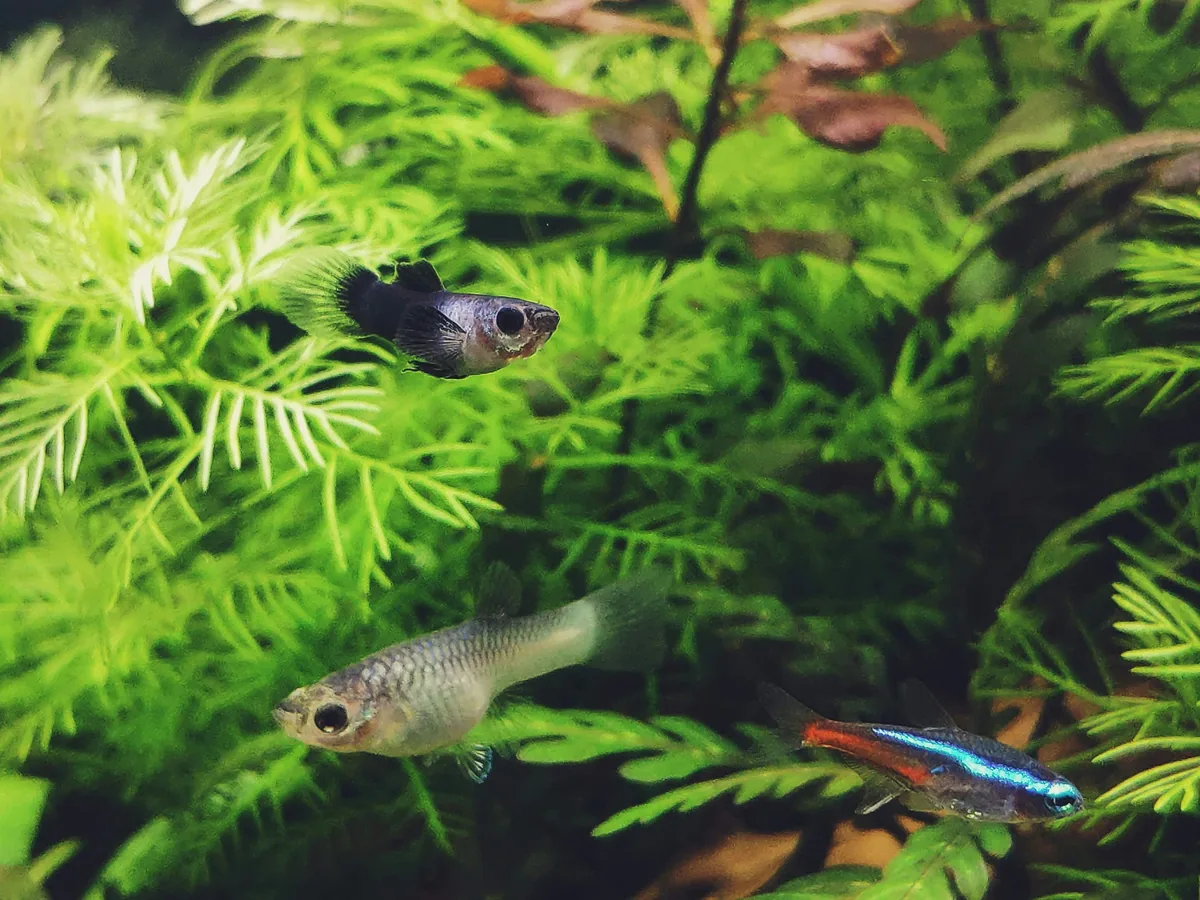
What Makes a Community Tank Work?
A community aquarium is any tank housing multiple fish species that coexist peacefully. The word “peaceful” is doing a lot of work in that definition. In practice, a working community depends on four things being aligned: compatible water parameters, compatible temperaments, appropriate tank size, and thoughtful use of the water column.
Get all four right and a community tank is one of the most rewarding and low-maintenance setups in the hobby. Get one wrong and you will have constant stress, injury, and disease regardless of how perfect your water chemistry is.
A true community tank — multiple species in appropriate groups — needs at least a 20-gallon long (30 × 12 inches (76 × 30 cm)). A 10-gallon can work for one or two small species, but a 29 to 40-gallon gives you the flexibility to do a community properly and creates a far more stable environment.
Step 1: Match Water Parameters First
Before thinking about temperament or aesthetics, every species in your community must be able to live in the same water. This means overlapping requirements for temperature, pH, and hardness (GH/KH). A fish that needs 26–28°C and soft, acidic water at pH 6.0–6.8 cannot be kept with a fish that thrives at 22°C and pH 7.8 in hard water. Keeping them together means one or both are permanently stressed and vulnerable to disease.
| Fish Group | Temperature | pH | Water Type |
|---|---|---|---|
| South American tetras, corydoras, rams | 24–28°C | 6.0–7.2 | Soft, slightly acidic |
| Livebearers (guppies (Poecilia reticulata), platies (Xiphophorus maculatus), mollies) | 22–28°C | 7.0–8.0 | Hard, alkaline |
| Rainbowfish | 24–28°C | 7.0–8.0 | Moderate to hard |
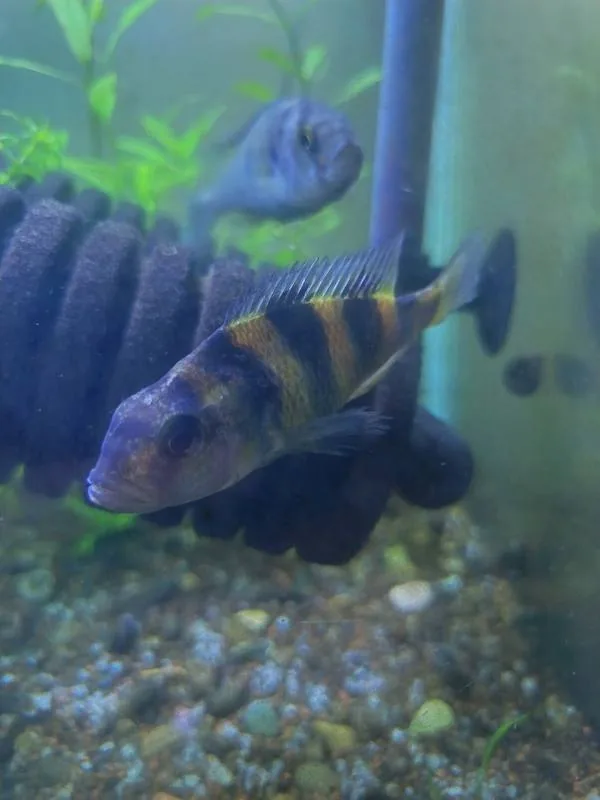
| African cichlids | 24–28°C | 7.8–8.5 | Very hard, alkaline |
| Goldfish | 15–22°C | 7.0–8.0 | Hard, cool |
The safest approach for beginners is to build a community around one fish group and choose all other species that share those same water requirements. South American communities (tetras, corydoras, rams, dwarf cichlids) are the most popular choice because they are widely available and their requirements are met by many tap water supplies or with simple adjustment.
Step 2: Match Temperaments
Water compatibility is necessary but not sufficient. Temperament must also be compatible. A peaceful water chemistry match does not prevent a tiger barb from shredding the fins of a betta, or an oscar from swallowing a neon tetra.
Temperament Categories
- Peaceful: Will not harass or injure other fish. Safe with virtually any non-aggressive species. Examples: neon tetras (Paracheirodon innesi), corydoras, otocinclus, ember tetras (Hyphessobrycon amandae), harlequin rasboras (Trigonostigma heteromorpha), cherry shrimp (Neocaridina davidi).
- Semi-aggressive: May chase or nip, especially if kept in too-small groups or with fin-heavy species. Requires careful selection of tank mates. Examples: tiger barbs (need groups of 10+), dwarf gourami (Trichogaster lalius) males, betta fish (Betta splendens), some barbs.
- Territorial: Defends a specific area, particularly during breeding. Manageable if the tank has enough space. Examples: most cichlids, rainbow fish males.
- Aggressive / predatory: Will actively hunt and consume smaller fish. Must be housed with similarly-sized species or alone. Examples: oscars (Astronotus ocellatus), jack dempseys (Rocio octofasciata), large catfish, red-tailed sharks.
Any fish will eat any other fish that fits in its mouth, regardless of how “peaceful” it is labelled. Angelfish (Pterophyllum scalare), for example, are peaceful with similarly-sized fish but will eat neon tetras. Always check adult mouth size alongside temperament ratings.
Step 3: Use the Whole Water Column
One of the most effective techniques for building a harmonious community is layering species by the area of the tank they naturally occupy. Fish that occupy different zones tend not to compete for the same space or resources, reducing aggression and stress. A fully utilised tank also looks far more alive and dynamic.
| Zone | Position | Example Species |
|---|---|---|
| Surface / top | Top 25% of water | Hatchetfish, betta, endlers (Poecilia wingei), surface-feeding livebearers |
| Mid-water | Middle 50% | Tetras, rasboras, barbs, rainbowfish, most schooling fish |
| Bottom | Bottom 25% | Corydoras, kuhli loaches (Pangio kuhlii), otocinclus, bristlenose pleco (Ancistrus sp.) |
A classic and reliable community layout for a 30-gallon: 10 harlequin rasboras (mid), 6 sterbai corydoras (bottom), 2 pearl gouramis (Trichopodus leerii, mid/surface), and 1 bristlenose pleco (bottom). Four species, three zones, no overlap, no conflict — all sharing the same water parameters.
Step 4: Respect Schooling Requirements
Many community fish are schooling species that are psychologically dependent on being kept in groups. A lone neon tetra is a stressed, pale, sickly fish that will hide constantly. Ten neon tetras in the same tank are a shimmering, confident school that occupies the open water confidently.
The minimum school size varies by species, but a reliable guideline is six as the minimum for most schooling fish, with eight to twelve being optimal for small species like tetras, rasboras, and danios. Never keep schooling fish in groups of three or four — this is a common beginner mistake that causes chronic stress and early death.
Step 5: Build Your Stocking Plan Before You Buy
Write out your planned community in full before buying anything. For each species, note the adult size, group size required, zone, and stocking contribution in inches. Add it up and compare it against your tank’s capacity using the stocking calculator. This takes ten minutes and prevents months of problems.
Add your planned fish species and quantities to the stocking calculator before purchasing. It weighs your plan against bioload capacity, filtration performance, and swimming terrain (the surface-area method), with a legacy length-based cross-check, and flags if you are approaching or over capacity.
Three Proven 30-Gallon Community Plans
| Plan | Stocking | Total Inches | Character |
|---|---|---|---|
| South American Classic | 10× Neon Tetra + 6× Bronze Cory (Corydoras aeneus) + 1× Dwarf Gourami + 1× Bristlenose Pleco | >24 in (61 cm) | Peaceful, planted, beginner-ideal |
| Livebearer Community | 6× Platy + 4× Male Guppy + 6× Swordtail (Xiphophorus hellerii) + 1× Bristlenose Pleco | >27 in (69 cm) | Colourful, active, easy |
| Rainbowfish Display | 6× Boesemani Rainbow + 6× Corydoras Sterbai + 1× Bristlenose Pleco | >26 in (66 cm) | Spectacular mid-water display |
Step 6: Add Fish in the Right Order
The sequence in which you add fish to a community matters more than most beginners realise. Fish establish territories based on first arrival. A fish that has been in a tank for three weeks will defend its space more aggressively against newcomers than it would against fish added at the same time.
- 1Add bottom dwellers first
Corydoras, otocinclus, and plecos are the least territorial and cause the least disruption. Add them first while the tank is establishing.
- 2Add schooling mid-water fish second
Add your largest school after 1–2 weeks. Tetras, rasboras, and barbs establish a roaming territory rather than a fixed one, which reduces aggression.
- 3Add centrepiece fish last
Gouramis, dwarf cichlids, and any dominant species go in last. By this point the tank is established and the new fish must fit into an existing community rather than dominate one.
- 4Wait one week between additions
Add each group, wait 7 days, test ammonia and nitrite, then add the next. This prevents bioload spikes and gives you time to spot any compatibility problems early.
Maintaining a Community Long-Term
A well-planned community tank settles into a stable rhythm that requires relatively little intervention. The main ongoing tasks are weekly water changes (20–25%), weekly gravel vacuuming, and monthly filter media rinsing in old tank water. Test your water monthly once the tank is mature — a stable, understocked, planted community rarely shows parameter swings after the first two months.
Watch for early signs of conflict: persistent chasing, fin damage, fish hiding continuously, or one species refusing to eat. These are signals that something in the community dynamic needs addressing — usually a tank mate that is incompatible, or a group that is too small and being bullied. Act on these signals early rather than hoping they resolve themselves. They rarely do.
Summary
A thriving community aquarium comes down to four decisions made before you buy a single fish: compatible water parameters, compatible temperaments, appropriate use of the water column, and correct group sizes. Get those four things right, cycle the tank fully, add fish slowly, and you will have a living display that requires minimal intervention and brings daily enjoyment.
The best community tanks are rarely the most complex. Some of the most beautiful setups are a single school of 15 rummy-nose tetras (Hemigrammus rhodostomus), a group of 8 corydoras, and a bristlenose pleco in a planted 40-gallon — three species, done properly, look extraordinary.
Check your stocking plan before you buy
Add your planned species and get an instant verdict on whether your community fits your tank.
Open Stocking Calculator →