What Is a Sponge Filter?
A sponge filter is one of the simplest and most effective filter designs in the hobby. It consists of a foam sponge attached to a central uplift tube, connected to an air pump via airline tubing. Water is drawn through the sponge by the rising air bubbles, and the sponge traps debris while also hosting the beneficial bacteria of the nitrogen cycle.
Sponge filters are cheap, reliable, nearly silent, and extremely gentle on water flow. They are one of the few filters that can run for years without replacement of any part.
How It Works
An air pump pushes air through airline tubing into the uplift tube. The rising bubbles create a current that draws water through the surrounding sponge. Debris is mechanically trapped in the foam, while the porous sponge surface provides enormous surface area for beneficial bacteria to colonise. The outflow of water adds oxygenation to the tank as bubbles break the surface.
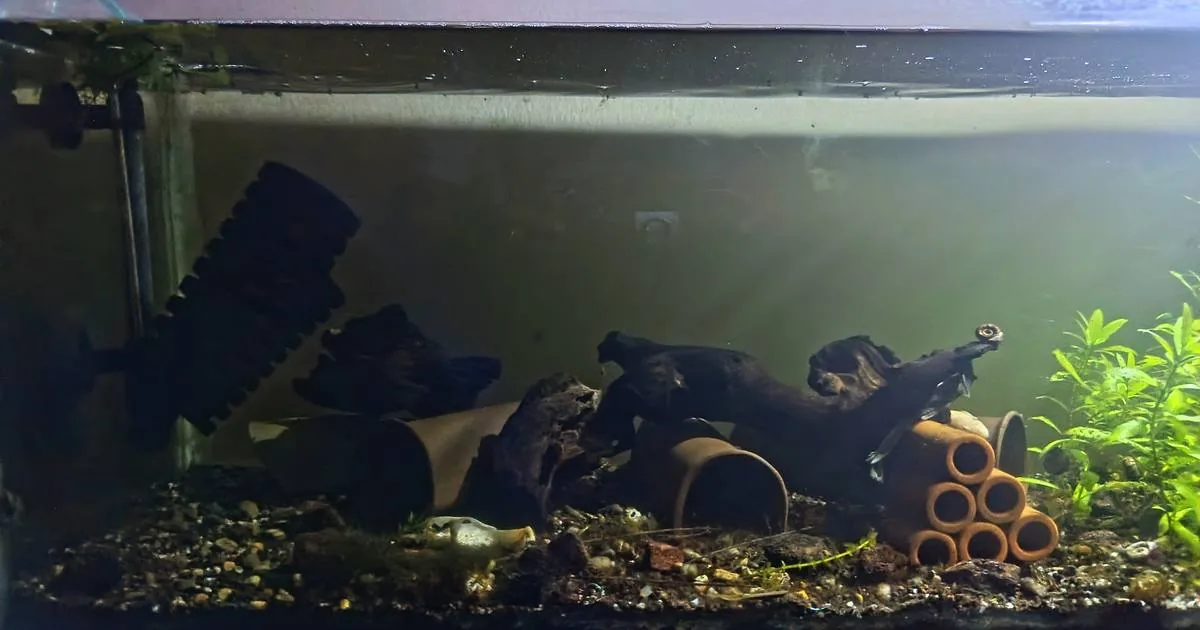
Unlike some filter designs that have separate mechanical and biological stages, the sponge in a sponge filter performs both simultaneously. This is why the sponge must never be replaced — only rinsed in tank water.
Setting Up a Sponge Filter
- 1Rinse the sponge
New sponges have manufacturing residue. Rinse thoroughly in dechlorinated water before placing in the tank.
- 2Place the filter
Position the sponge filter on the substrate. Most designs have a weighted base or a suction cup to hold them in place. Position away from the heater.
- 3Connect the airline
Run airline tubing from the top of the uplift tube out of the tank and connect to the air pump. Keep the pump above the waterline, or use a check valve to prevent back-siphoning if the power cuts out.
- 4Adjust airflow
Use the flow control valve on the pump or a gang valve on the airline to adjust bubble rate. A slow, steady stream of bubbles is more efficient than rapid blasting. You want a gentle upward current, not a churning vortex.
When to Use a Sponge Filter
Breeding and fry tanks: Sponge filters produce no suction that could trap baby fish or shrimp. They are the standard choice for breeding setups. This also makes them ideal for shrimp tanks.
Quarantine tanks: Easy to clean between uses, no impeller to harbour pathogens, and simple to disinfect. Check our disease guide for quarantine protocols.
Shrimp tanks: Shrimp are frequently sucked into hang-on-back and canister filters. See our filter types guide for a full comparison. Sponge filters eliminate this risk entirely.
Betta and slow-water species: Bettas, gouramis, and most labyrinth fish dislike strong currents. A sponge filter provides adequate filtration with minimal flow.
Tank seeding: Running a spare sponge filter in an established tank is the fastest way to instantly cycle a new aquarium. The seeded sponge carries a ready colony of beneficial bacteria.
Cleaning and Maintenance
Squeeze the sponge in a bucket of tank water (siphoned during a water change) every 2–4 weeks. Rinse until the rinse water runs mostly clear, then return the sponge to the tank. Never use tap water. Never replace the sponge unless it's physically falling apart — it takes months to re-establish the bacterial colony a mature sponge contains.
Sponge Filter vs Other Filter Types
| Feature | Sponge Filter | HOB Filter | Canister Filter |
|---|---|---|---|
| Cost | >Very low | >Moderate | >High |
| Flow rate | >Low | >Medium | >High |
| Safe for fry/shrimp | >Yes | >No | >No |
| Suitable for large tanks | >No (alone) | >Medium tanks | >Yes |
| Maintenance effort | >Very low | >Low–moderate | >Moderate–high |
Why I run sponge filters in every breeding tank
Most of my bristlenose breeding tanks run on nothing but an air-driven sponge filter, and it’s a deliberate choice rather than a budget one. When fry hatch, a hang-on-back or canister intake will happily pull them in — a sponge can’t. The flow is gentle enough that day-old fry sit on the glass undisturbed, and the sponge itself becomes a grazing surface: newly free-swimming bristlenose pick biofilm straight off it in their first few days before they move onto crushed food and vegetables.
There’s a biological argument too. A mature sponge holds an enormous bacterial colony for its size, so it absorbs the bioload of a tank full of growing fry without the nitrite spikes you’d get from an under-seeded power filter. Pair it with a couple of breeding caves and some Indian almond or mango leaves for cover and tannins, and you have a low-stress, low-maintenance grow-out tank.
Sizing the air pump — and surviving power cuts
You don’t need a powerful pump, you need a consistent one. A single small-to-medium sponge runs happily on a modest air pump; if you’re driving several sponges off one pump through a manifold, step up the output and fit a check valve on each line. More air isn’t better past the point where the sponge bubbles steadily — you just get noise and splatter.
The bigger issue, wherever mains power is unreliable, is extended outages. When the power drops, a sponge stops moving water and oxygen, and within a few hours the bacterial colony starts to suffer — a far worse outcome than a cosmetic one, because a crashed filter means re-cycling a tank that already has fish in it.
My fix is cheap and boring: a small battery-backup air pump — the kind that switches on automatically when mains power fails — on the rack that matters most. Through a typical two-to-four-hour outage it keeps the sponges bubbling, the colony stays alive, and nothing notices the lights went out except me.
If you only protect one thing during outages, protect air to your biological filter. Heaters and lights can wait; the bacteria can’t.
Recommended Products
Sponge Filter + Air Pump
Best for: Shrimp tanks, fry tanks, and low-budget setups.
Cheap, nearly indestructible, shrimp-safe, biological filtration only.
HOB Filter (Aquaclear 20)
Best for: 10–20 gallon community tanks.
Mechanical + biological + chemical, easy to maintain, reliable.
Canister Filter (Fluval 107)
Best for: 20–40 gallon planted or heavily stocked tanks.
Silent, high media capacity, superior water clarity, low maintenance.