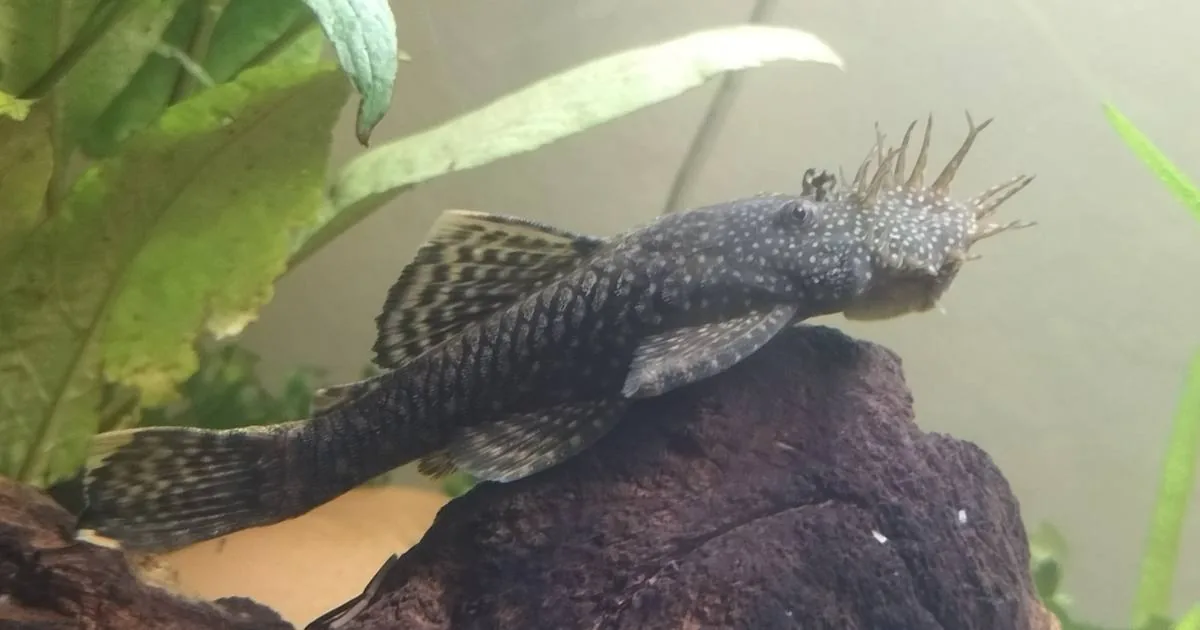
Bristlenose Plecos — or BNs as most hobbyists call them — are one of the most rewarding fish you can breed in a home aquarium. They are hardy, peaceful, genuinely useful algae eaters, and once they start breeding, they are remarkably consistent. But getting to that first successful spawn takes understanding a few non-negotiable basics that most beginner guides skip over.
This guide is written from real experience — not a textbook. From a first overstocked 30cm cube with a Chinese algae eater that outgrew everything, through years of planted tanks, shrimp disasters, cichlid mistakes, and finally landing on a dedicated BN breeding project with commons, albinos, calicos, and blue-eyed variants. Everything here has been lived, not just researched.
Why Bristlenose Plecos Are the Best Beginner Breeding Project
Bristlenose Plecos tick every box for a first breeding project. They are cold-water tolerant — no heater required at typical indoor room temperatures. They are cave breeders, meaning spawning is contained, predictable, and the male guards the eggs, doing most of the work for you. Fry are hardy compared to egg scatterers or mouthbrooders. Demand is consistent — local fish stores, Facebook groups, and hobbyist communities always want quality BN stock, especially albino and longfin variants. And multiple variants exist — common, albino, calico, blue-eyed, and longfin offer a genuine breeding project with goals to work toward.
Tank Setup for Breeding Bristlenose Plecos
You do not need a massive tank to breed BNs, but tank size does matter for success. A 60cm or longer tank gives males enough territory to claim a cave without constant fighting. In a smaller tank with multiple males, you will see aggression — dominant males will chase and even kill competitors given enough time.
- Size: 60cm minimum, 90cm preferred for a small colony
- Substrate: Potting soil capped with silica or black sand — BNs love to graze along the bottom
- Filtration: A large sponge filter — no suction risk to fry, strong biological filtration
- Plants: Java fern, anubias, and hygrophila polysperma are ideal
- Driftwood: Essential — BNs rasp on it as part of their diet
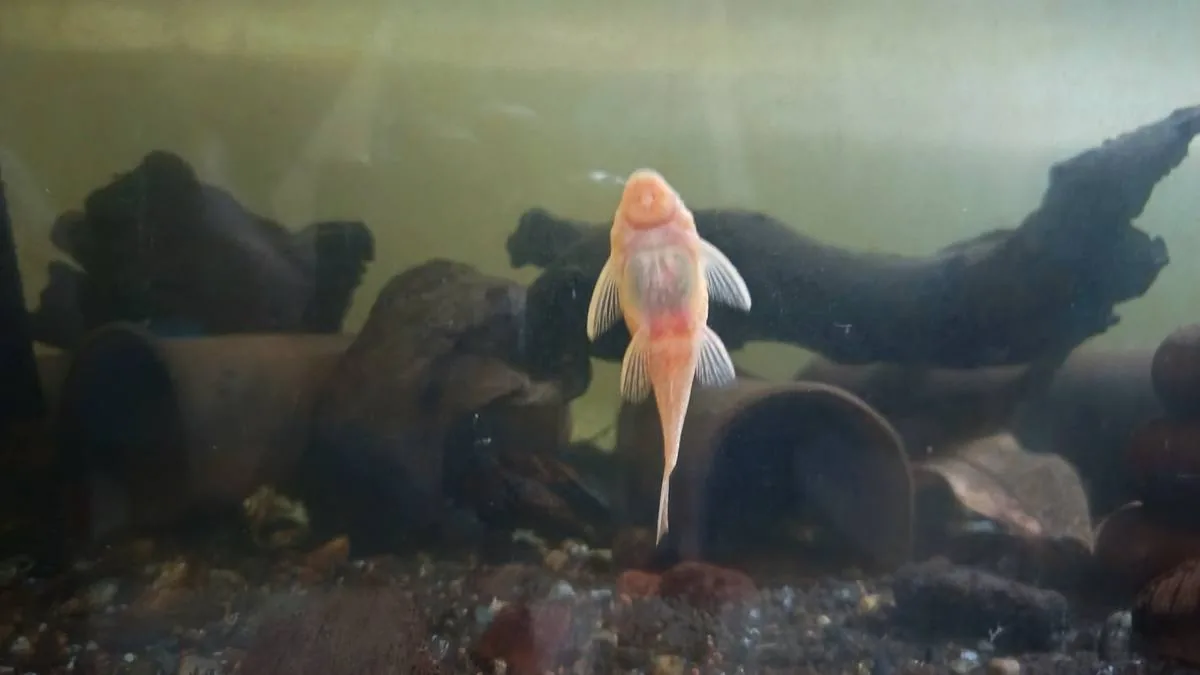
Female albino BN — rounder body profile when gravid, minimal bristles
Caves: The Single Most Important Factor
If there is one thing that determines whether your BNs breed or not, it is caves. Bristlenose Plecos are obligate cave spawners — the male selects a cave, cleans it obsessively, and entices a female inside to lay her eggs. Without the right caves, breeding simply will not happen. A good cave is dark, enclosed, and just large enough for the male to turn around inside. It should have a single opening for the male to guard. Terracotta pipes, PVC, or natural slate stacked to form a chamber all work well. Provide more caves than you have males — in a 90cm tank, six caves spread across the length works well and removes competition stress.
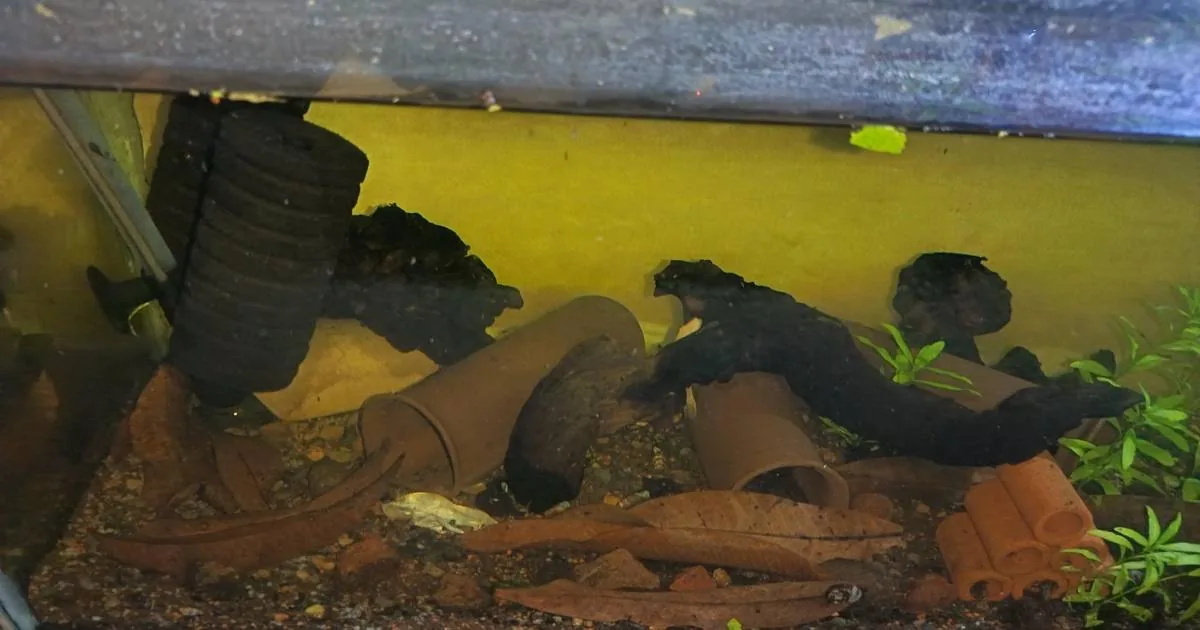
Top view of the current breeding setup — terracotta caves, driftwood, and mango leaves
Sexing Bristlenose Plecos
Sexing BNs correctly is one of the trickiest parts for beginners. The most reliable method is checking for bristles. Males have large, prominent tentacles on the snout and head. Females may show small bristles only on the lip edge or none at all. Body shape helps too — females are rounder, especially when gravid. Bristles typically appear by 6 to 8 months in males.
Female longfin BN — note the extended fin rays and rounder body
Conditioning Your Breeding Pair
Once you have a confirmed male and female, conditioning for breeding is straightforward. English cucumber — blanched for 2 minutes, cooled, and dropped into the tank — produces the strongest feeding response consistently. Algae wafers are a daily staple. Blanched spinach and zucchini add variety. Frozen bloodworm or brine shrimp once or twice a week adds protein that triggers breeding conditioning. Always keep driftwood in the tank — BNs digest the fibres and it is a genuine part of their diet.
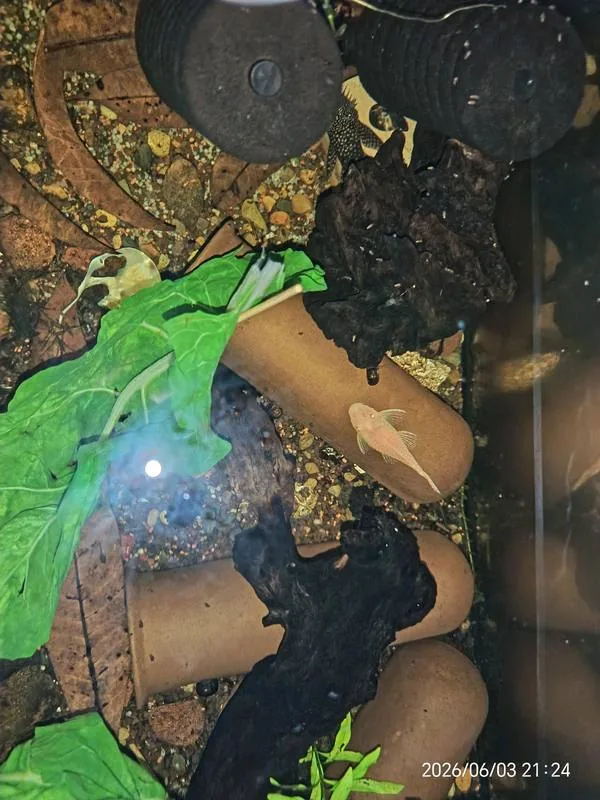
Feeding time — blanched spinach in the tank, BNs graze immediately
The Spawning Process
Once conditions are right, spawning happens with little input from you. The male claims a cave and begins cleaning it. When a female is ready she enters and deposits a clutch of bright orange eggs — typically 30 to 100 depending on her age and condition. The male stays with the eggs constantly, fanning them with his fins to oxygenate them and removing any unfertilised eggs. Do not disturb the cave during this period. Eggs hatch in approximately 4 to 7 days. Fry remain attached to their yolk sacs for another 2 to 4 days before becoming free-swimming.
Raising BN Fry
Free-swimming fry are tiny — about 1cm — and immediately begin grazing on surfaces. Your sponge filter is critical here, keeping the tank clean without sucking fry into the intake. Feed finely crushed algae wafers, thin slices of cucumber, and rely on biofilm on driftwood as natural first food. Do small, frequent water changes — 10 to 15% every two to three days using dechlorinated water. If dechlorinator runs out, leaving tap water in a bucket for 24 to 48 hours in direct sunlight off-gasses chlorine naturally, though a dechlorinator is always the safer first choice.
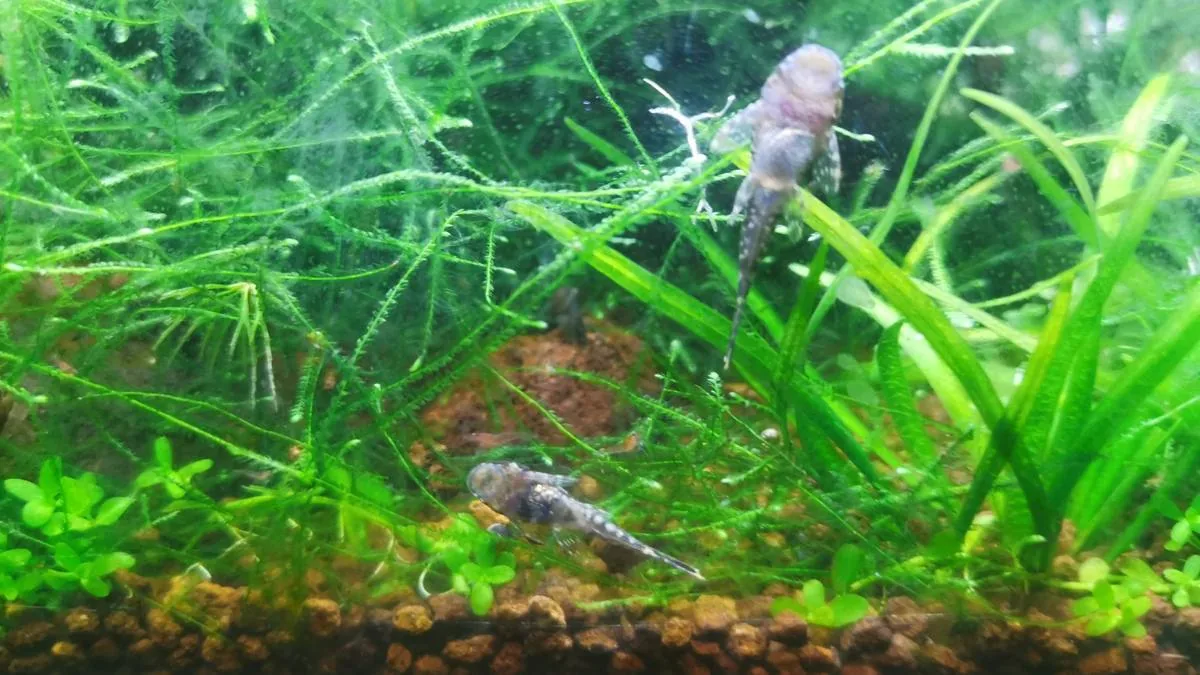
Juvenile BNs at a few weeks old — already grazing and growing fast
Working Toward Albino and Longfin Lines
Once you have mastered breeding commons, working toward albino or longfin lines opens a more interesting and profitable project. The albino trait is recessive — both parents need to carry the gene for albino fry to appear consistently. Starting with a confirmed albino male paired with a longfin female begins introducing both traits into a single line. This is a multi-generation project. The first generation may produce all normal-looking fry that carry the albino gene without expressing it. By the second generation — pairing siblings or back-crossing to the albino parent — albino offspring begin appearing. Patience is everything. Keeping detailed records of which pair produced which clutch guides your selection over time.
Selling Your Stock
Once your colony is producing consistently, selling surplus stock is straightforward. Local fish stores will often take juveniles at around 3 to 4cm. Facebook groups dedicated to aquarium fish in your region are strong markets, especially for albino and longfin variants. Common BN juveniles typically sell for inexpensive to moderately priced to inexpensive to moderately priced each. Albinos fetch inexpensive to moderately priced to inexpensive to moderately priced. Longfin and albino longfin variants can command inexpensive to moderately priced to inexpensive to moderately priced or more per fish depending on quality. Build relationships with your local fish store early — even before you have stock to sell. Stores that trust a consistent local supplier will buy regularly, which beats one-off private sales for building steady income.