Quick Stats
| Adult Size | 8–10 cm |
| Minimum Tank | 30 gal |
| Temperature | 18–24°C (unheated in warm house) |
| pH Range | 6.0–8.0 |
| Hardness (GH) | 5–20 dGH |
| Difficulty | Easy |
| Temperament | Peaceful (can be nippy) |
| Diet | Omnivore — flakes, pellets, frozen bloodworms, blanched vegetables |
| Schooling | 6+ required (8–10 better) |
Tank Setup
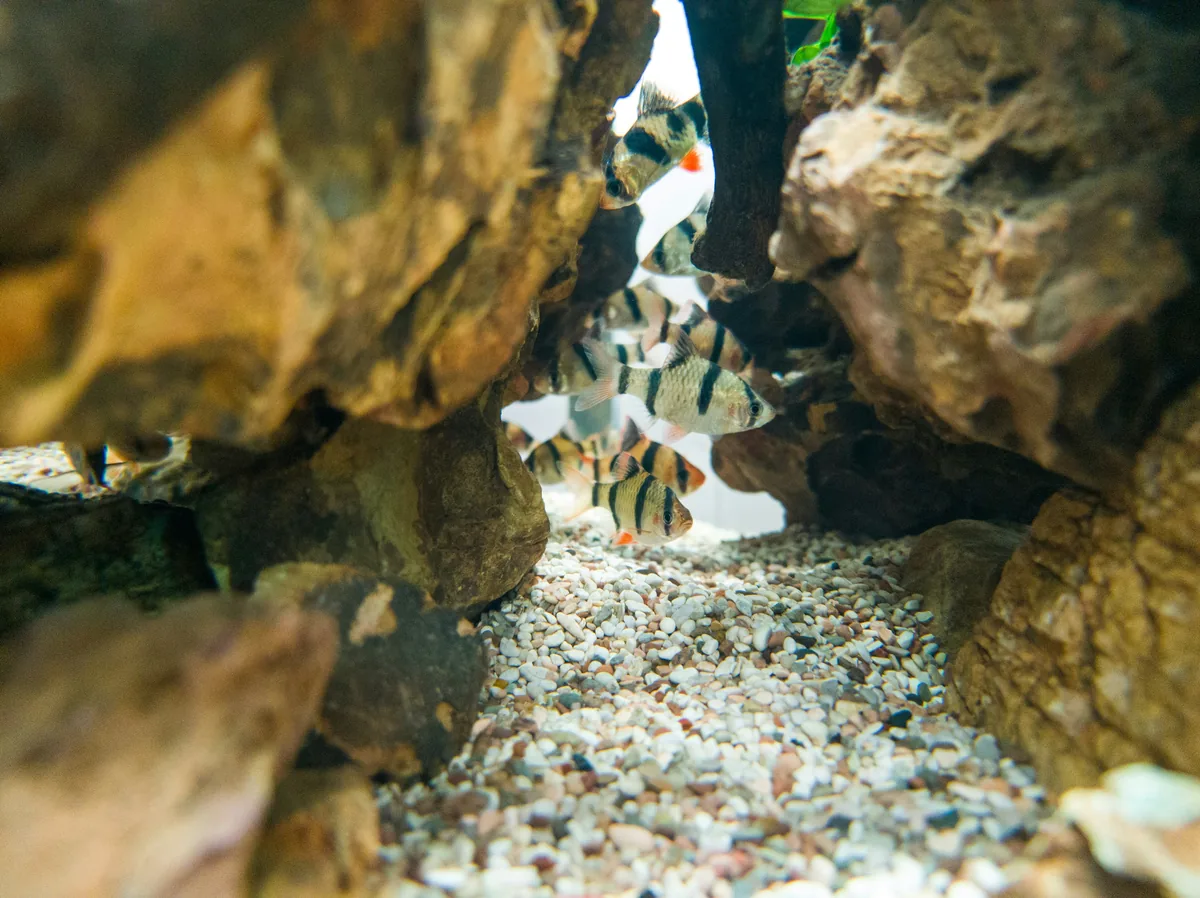
Rosy barbs (Pethia conchonius) are native to India and one of the hardiest barbs in the hobby. They tolerate temperatures from 18–24°C, which means an unheated tank in a temperate-climate house works perfectly. A 30 gallon tank is the minimum for a school of 6–8 — they are active, fast swimmers that need horizontal space more than depth.
Water parameters: temperature 18–24°C, pH 6.0–8.0, hardness 5–20 dGH. They are unfussy about chemistry as long as the water is clean and cycled. Avoid temperatures above 26°C — they become stressed and prone to disease.
Set up the tank with a dark sandy substrate, driftwood, and hardy plants (Java fern, Anubias, Vallisneria). They don't damage plants but are fast enough to uproot delicate species during their constant patrolling. Provide open swimming space in the front and plant cover in the back. A powerhead or strong hang-on-back filter creating moderate current mimics their native river habitat.
Tank Mates
Rosy barbs are generally peaceful but can be fin-nippers, especially if kept in too-small groups. The rule is: 6+ barbs keeps the nipping directed at each other (display behaviour) rather than at tank mates. Avoid housing with long-finned fish (betta, angelfish, guppy) unless the barb school is large enough to stay occupied internally.
Compatible tank mates: other cold-water species (White Cloud Mountain Minnows, Zebra Danios, Weather Loaches), Cherry Shrimp, Amano Shrimp, Japanese Trapdoor Snails, and fast-swimming mid-water fish that can keep up with the barbs' pace.
Avoid: slow-moving long-finned fish (betta, guppy, angelfish — fins will be nipped), tiny nano fish (chili rasbora, ember tetra — may be stressed by the barbs' speed), and aggressive species (cichlids). Don't house with Goldfish — goldfish prefer cooler water than rosy barbs and the barbs may nip the goldfish's flowing fins.
Diet & Feeding
Rosy barbs are unfussy omnivores. They accept flakes, micro pellets, sinking pellets, frozen bloodworms, frozen brine shrimp, and blanched vegetables (spinach, zucchini, cucumber). They also graze on soft algae and plant matter.
Feed once or twice daily. They are surface and mid-water feeders — floating or slow-sinking foods work best. A varied diet keeps the red colour in males vivid; flake-only diets fade them over months.
They will eat soft algae but won't control a serious algae bloom — they're not as effective as Otocinclus or Nerite snails. They will also eat duckweed and other small floating plants, which can be useful (or frustrating, if you're trying to grow those plants).
Common Health Issues
Rosy barbs are extremely hardy when kept cool. The main health issues are ich (white spot disease) when stressed by temperature swings, and fin rot when water quality drops. Both are easily treated with standard medications and clean water.
They are also prone to 'thin disease' — a chronic wasting condition caused by internal parasites. A healthy rosy barb should look rounded, not hollow-bellied. If yours is thin despite eating, treat with a parasite medication containing praziquantel or metronidazole.
Lifespan is typically 4–6 years. They grow quickly — a 3 cm juvenile can reach 8 cm in 6 months with good feeding. The males' red colour intensifies with age and condition; a faded male is usually stressed or in poor water.
Breeding
Rosy barbs are egg-scatterers and among the easiest barbs to breed. They spawn in the early morning, scattering 100–300 adhesive eggs over plants or spawning mops. They eat their own eggs greedily — remove adults immediately after spawning.
Sexing is straightforward: males are bright red-orange with black-tipped fins, females are silvery-gold with a more rounded belly. To breed deliberately, condition a group with high-protein frozen foods for a week, then move a male and a female to a planted 10 gallon tank with spawning mops. Spawning usually happens the next morning.
Eggs hatch in 24–36 hours. Feed fry infusoria for the first 3 days, then microworms or baby brine shrimp. They grow quickly and are free-swimming within a week. The species is farmed in huge numbers for the hobby, so captive-bred juveniles are widely available.
Frequently Asked Questions
Do Rosy Barbs need a heater?
No — they tolerate 18–24°C and do well in an unheated tank in a temperate-climate house. Sustained temperatures above 26°C stress them and shorten their lifespan. In a cold room (below 18°C) you may need a heater set to 20°C as a baseline.
Are Rosy Barbs fin-nippers?
They can be, especially if kept in too-small groups. The rule: 6+ barbs keeps the nipping directed at each other (display behaviour) rather than at tank mates. Avoid housing with long-finned fish (betta, angelfish, guppy) unless the school is large.
How many Rosy Barbs should I keep together?
Six is the absolute minimum; eight to ten is better. They are a schooling fish and a single Rosy Barb will pine, lose colour, and become aggressive. Males display far more intensely in a proper school.
Can Rosy Barbs live with goldfish?
Not recommended. Goldfish prefer cooler water (15–22°C) than rosy barbs (18–24°C), and the barbs may nip the goldfish's flowing fins. Keep rosy barbs in a dedicated cool-water community tank with White Clouds or Danios instead.