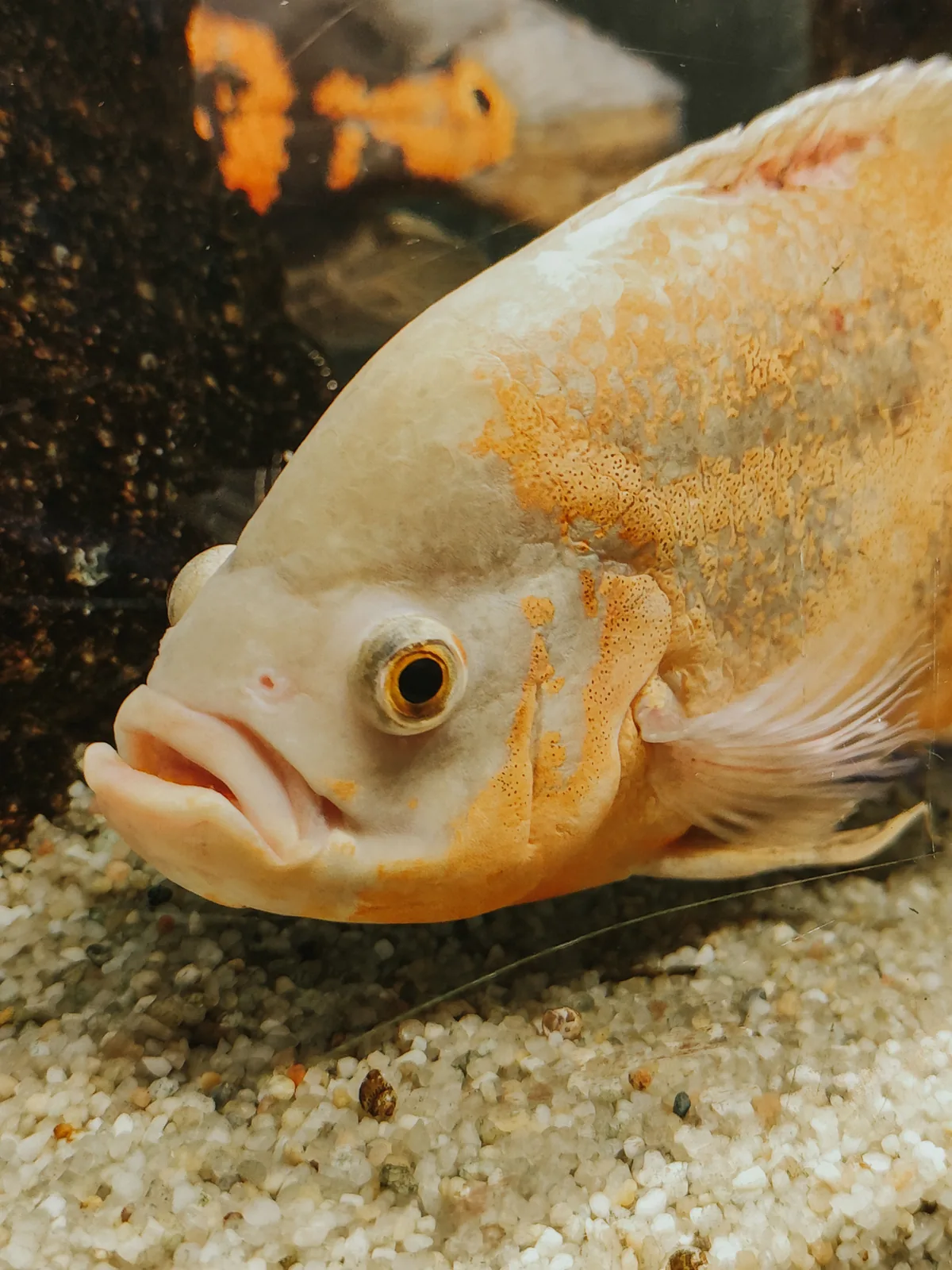
The Oscar Trap
You're standing in front of a tank at the pet store. Inside, a small, attractive fish around 5 cm long swims among the plastic plants. The label says "Oscar — $8." It looks like a community fish. It is not.
That 5 cm juvenile Astronotus ocellatus will grow to 30 cm within 18 months. It will eat every tetra, guppy, and shrimp in your tank. It will require a 75-gallon aquarium minimum, produce the waste of ten similarly-sized community fish, and rearrange your substrate and decorations nightly because Oscars are physical, intelligent, and constantly digging. The store didn't hide this information — it just didn't volunteer it, and the fish in the tank looked small enough to take home.
This is the single most common way beginners end up with fish they can't keep. Not through malice, not through stupidity — through trusting the size of the fish in the store tank as a guide to the fish's adult size. It isn't. Almost every fish in a pet store is a juvenile, and many species grow to five or ten times their sale size within a year. The "nano" label is meaningless when you're looking at a baby.
Why Stores Sell Juveniles
Pet stores sell juveniles for straightforward economic reasons. Juveniles are cheaper to raise, cheaper to ship, take less tank space, and are easier to sell because they look small and manageable. A store can fit 50 juvenile Oscars in a 20-gallon display tank; it can fit maybe 4 adults. The wholesale price of a 5 cm juvenile is a fraction of what a 25 cm adult would cost to feed and house for two years.
None of this is a conspiracy. The store staff may genuinely not know the adult size of every species they sell — turnover is high, training is minimal, and the labels on the tanks usually show the species name and price, not the adult size or minimum tank volume. The information exists; it just isn't on the label. The responsibility to look it up falls on you, the buyer.
This is the core message of this guide: the size you see in the store is the smallest the fish will ever be. Everything from here is growth. A fish that looks like it fits your 10-gallon today may need a 75-gallon this time next year. Research before you buy, not after.
The "Nano" Label Problem
The "nano fish" label is useful when it refers to a species that stays small as an adult — a chili rasbora, an ember tetra, a celestial pearl danio. These are genuinely nano fish: 2–3 cm at maturity, suitable for small aquariums, and they stay that size for their entire lifespan.
The problem is that "nano" gets applied to any small fish in the store, including juveniles of large species. A 5 cm juvenile Oscar is not a nano fish. A 5 cm juvenile common pleco is not a nano fish. A 7 cm juvenile iridescent shark is absolutely not a nano fish. But all of them look like nano fish when you see them in a display tank, and the label on the tank rarely says "grows to 30 cm — needs 75 gallons."
The fix is simple: never trust the size you see. Always look up the adult size of the species, not the size of the individual in the store. The fish database on this site lists adult sizes for 50+ common species; for anything not in the database, a 30-second search on a reputable care sheet will tell you. If the adult size is larger than your tank can hold, the fish is not for you — no matter how small it looks today.
Commonly Mis-Sold Species
Some species are repeatedly mis-sold to beginners because their juveniles are small, attractive, and look like community fish. These are the ones to be most careful with — if you see them in a store, assume the adult size is much larger than the specimen on display.
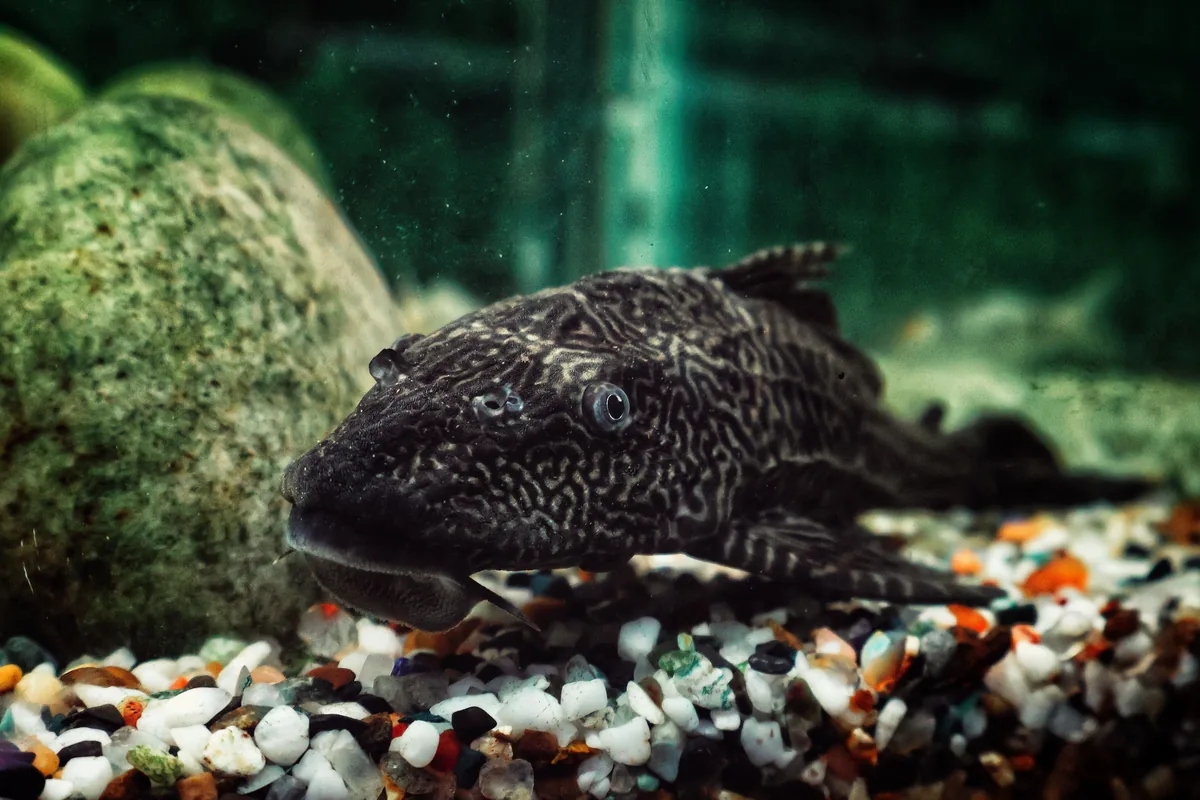
| Species | Sale Size | Adult Size | Min Tank | The Problem |
|---|---|---|---|---|
| Common Pleco Hypostomus plecostomus | 5 cm | 30–45 cm | 75+ gal | Sold as an algae eater for small tanks. Grows to the length of a forearm and stops eating algae. |
| Oscar Astronotus ocellatus | 5 cm | 25–30 cm | 75 gal | Sold as a colourful community fish. Eats anything that fits in its mouth, including tankmates. |
| Iridescent Shark Pangasianodon hypophthalmus | 7 cm | 100–130 cm | Pond | Sold as a "shark" for community tanks. Grows to over a metre and needs a pond or enormous tank. |
| Bala Shark Balantiocheilos melanopterus | 5 cm | 30–35 cm | 150 gal | Sold as a schooling community fish. Needs a 6-foot tank and a school of 5+. |
| Tinfoil Barb Barbonymus schwanenfeldii | 5 cm | 30 cm | 125 gal | Sold as a community barb. Grows large, schools, and eats plants. |
| Red Tail Shark Epalzeorhynchos bicolor | 5 cm | 15 cm | 55 gal | Stays smaller but becomes highly territorial. One per tank, with hiding spots. |
| Chinese Algae Eater Gyrinocheilus aymonieri | 5 cm | 25 cm | 55 gal | Sold as an algae eater. Becomes aggressive and sucks slime coats off other fish. |
| Clown Loach Chromobotia macracanthus | 5 cm | 25–30 cm | 150 gal | Sold as a small community loach. Needs a 6-foot tank and a school of 5+. |
| Pictus Catfish Pimelodus pictus | 5 cm | 12–15 cm | 55 gal | Stays smaller but eats anything that fits in its mouth. Active swimmer. |
| Silver Dollar Metynnis hypsauchen | 5 cm | 15–20 cm | 75 gal | Sold as a community fish. Needs a school of 5+ and eats live plants. |
None of these are "bad" fish — they're just fish that need much larger tanks than beginners typically have. The problem isn't the species; it's the mismatch between the fish's adult requirements and the tank it gets sold into. A Common Pleco in a 125-gallon is a magnificent, long-lived fish. The same Common Pleco in a 10-gallon is a slow-motion welfare problem.
Five Questions to Ask Before Buying Any Fish
Before you buy any fish, look up the answers to these five questions. If you can't answer all five, don't buy the fish. The research takes two minutes; the fish lives in your tank for years.
- 1What is the adult size?
Not the size in the store — the size at maturity. This is the single most important number. If the adult size is larger than your tank can accommodate (use the stocking calculator to check), the fish is not for you, no matter how small it looks today.
- 2What is the temperament?
Peaceful, semi-aggressive, territorial, or aggressive? A peaceful community fish works in most tanks; a territorial cichlid needs a species-specific setup. Don't trust the store label — look up the species on a reputable care sheet and read the temperament section.
- 3What water parameters does it need?
Temperature range, pH range, and hardness range. If your tap water is pH 8.0 and hard, you cannot keep a blackwater tetra that needs pH 5.5 without years of water-chemistry work. Match fish to your water, not the other way around.
- 4Does it need to school?
Many fish — tetras, rasboras, barbs, danios, corydoras — are schooling fish that pine, lose colour, and become aggressive if kept alone or in too-small groups. If the species schools, you need to buy at least 6, which multiplies the bioload. Can your tank hold 6?
- 5What is the minimum tank size?
Look up the minimum tank size for the species — not the inch-per-gallon rule, the actual minimum recommended by experienced keepers. If your tank is smaller than the minimum, don't buy the fish. The minimum exists for a reason: swimming space, territory, and bioload capacity.
How to Actually Research a Fish
The research itself is straightforward. The problem is knowing where to look and which sources to trust. Here's the process I use before buying any species I haven't kept before:
Step 1: Check the fish database. If the species is in our fish database, you'll find the adult size, temperature range, pH, hardness, temperament, diet, schooling requirement, and difficulty rating in one place. This covers 50+ common species and is the fastest starting point.
Step 2: Cross-reference with a second source. Never trust a single source. Look up the species on at least one other reputable care sheet — Seriously Fish is the gold standard for accurate species data, and FishBase has the scientific data on maximum size and distribution. If two sources agree on adult size and minimum tank, you can trust the number.
Step 3: Search for the species on aquarium forums. Search "species name tank size" or "species name beginner" on a forum like Planted Tank or the r/Aquariums subreddit. Real keepers' experiences reveal things care sheets don't: aggression triggers, hidden sensitivities, compatibility quirks. If multiple keepers say "this fish needs a bigger tank than the care sheets suggest," listen.
Step 4: Run the stocking calculator. Once you know the adult size and schooling requirement, enter them in the stocking calculator along with your existing fish. The calculator tells you whether your tank can hold the new addition at its adult size — not the juvenile size you're buying. This is the step that prevents the Oscar-in-a-10-gallon scenario.
Step 5: Sleep on it. If the research checks out, wait 24 hours before buying. Impulse buys are the source of most stocking mistakes. A day of reflection weeds out the "that looks cool, I'll take it" purchases that turn into rehoming projects six months later.
Red Flags at the Pet Store
Certain store practices should trigger extra caution regardless of the species. If you see any of these, slow down and do the research before buying:
- "Assorted" labels. If a tank is labelled "assorted cichlids" or "assorted barbs" with no species names, you don't know what you're buying. The juvenile in the bag could grow to 5 cm or 30 cm. Walk away unless staff can identify the exact species.
- Tank labels with no adult size. A label that shows only the species name and price is a red flag. Reputable stores include the adult size and minimum tank volume on the label. If they don't, look it up yourself before buying.
- "Good for community tanks" on a species you don't recognise. This phrase is overused. Many fish sold as "community safe" are community safe only as juveniles — they become territorial or predatory as adults. Verify with independent research.
- "Algae eater" labels. The "algae eater" label is applied to Common Plecos, Chinese Algae Eaters, and Otocinclus alike — three fish with completely different adult sizes and temperaments. Always look up the species, not the label.
- Fish much smaller than the store's display size. If the fish in the bag is 3 cm and the same species in the store's display tank is 15 cm, you're seeing the growth trajectory in real time. That 15 cm fish is what you'll have in a year.
- Staff who can't answer basic questions. If you ask "how big does this get?" and the staff member doesn't know or guesses, that's a sign to do your own research before trusting any of their other advice.
The Impulse Buy Problem
Almost every stocking mistake traces back to an impulse buy. You went to the store for filter media and came home with a fish you'd never researched. The fish looked small, the price was right, and the excitement of a new tank addition overrode the discipline of looking it up first. Every aquarist has done it. The ones who stick with the hobby long-term learn to resist it.
The fix is structural, not willpower-based. Before you go to the store, write down the species you're planning to buy — no more, no less. Research each one at home using the process above. At the store, buy only what's on the list. If you see something else that catches your eye, take a photo, look it up at home, and come back next week if it's still appropriate. The fish will still be there; the impulse to buy it will have passed.
This sounds restrictive, but it's the single highest-leverage habit in the hobby. The keepers with the healthiest tanks aren't the ones with the most knowledge — they're the ones who consistently do their research before buying and consistently resist the impulse purchases that don't fit their setup. Every fish you don't buy on impulse is a fish you don't have to rehome, return, or watch die in a tank that was too small.
Frequently Asked Questions
Why do pet stores sell fish that outgrow most home aquariums?
Pet stores sell juveniles, which are small and fit in any tank. The fish grow — sometimes to 30 cm or more — but by then you've already bought it. Stores rely on customers not researching adult size. Always look up the adult size of any fish before buying, not the size you see in the store tank.
What fish are most commonly mis-sold to beginners?
The classic offenders are the Common Pleco (sold at 5 cm, grows to 45 cm), Oscar (sold at 5 cm, grows to 30 cm), Iridescent Shark (sold at 7 cm, grows to 100 cm), Bala Shark (sold at 5 cm, grows to 35 cm), and Tinfoil Barb (sold at 5 cm, grows to 30 cm). All are sold as small juveniles that look like community fish.
How do I research a fish before buying it?
Look up five things: adult size (not juvenile size), temperament, water parameter requirements (temperature, pH, hardness), schooling needs, and minimum tank size. Cross-reference at least two sources — a care sheet and a fish database. If the adult size or minimum tank size is larger than your setup, don't buy the fish.
Is the "nano fish" label reliable?
Only for species that stay small as adults. The problem is that "nano" is often applied to juveniles of large fish — a 5 cm juvenile Oscar or Common Pleco is not a nano fish, even though it looks like one. Always verify the adult size, not the size in the store tank.
What should I do if I've already bought a fish that's too big for my tank?
Three options: rehome it to a keeper with an appropriate tank (local aquarium clubs and forums are best), return it to the store if they accept returns, or upgrade your tank to suit the fish's adult size. Do not release it into a local waterway — introduced species cause ecological damage and it's illegal in most regions. Act before the fish outgrows its current tank; stressed, stunted fish are harder to rehome.