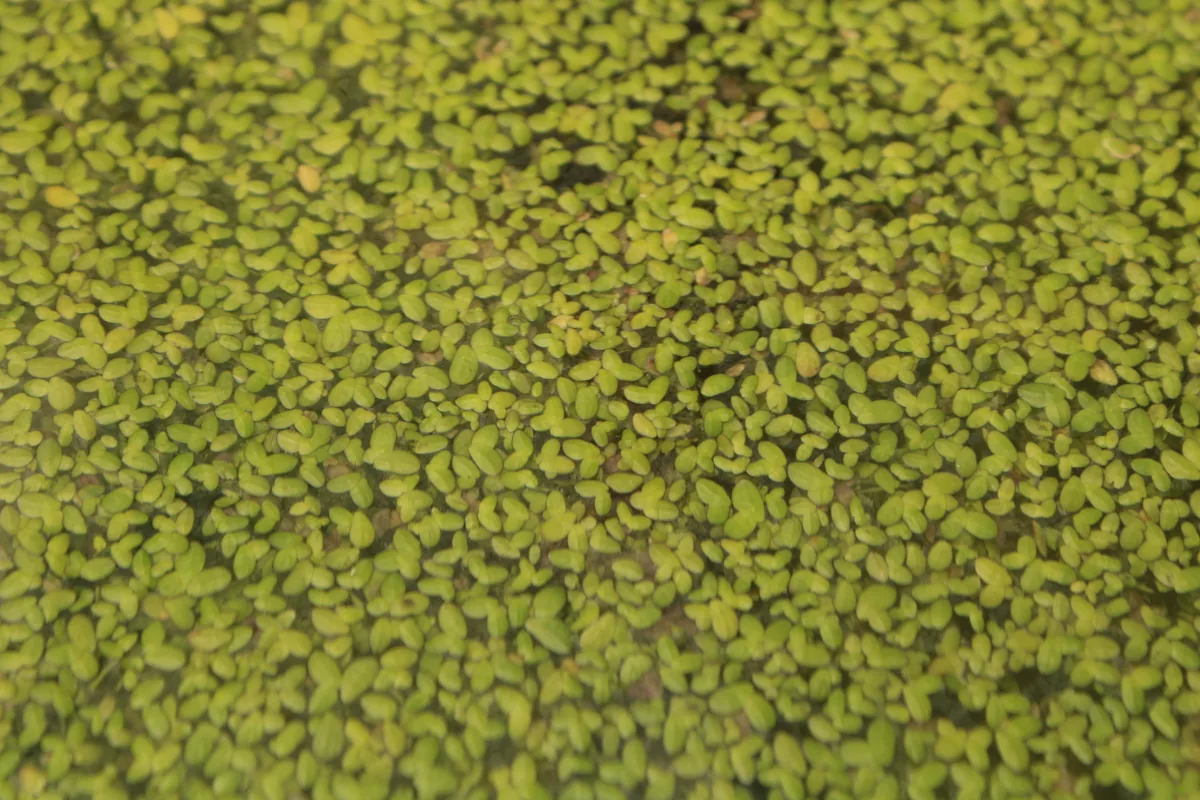
Duckweed is the only plant in this series I describe as both a tool and a pest, depending entirely on which tank it is in. In a heavily stocked goldfish tank or a cichlid tank where nitrate control is a constant battle, duckweed is one of the best nitrate sponges in the hobby — it pulls nitrogen and phosphate out of the water faster than almost anything else, it grows in any conditions, and the fish you keep with it either eat it (goldfish) or ignore it (most cichlids). In a planted community tank where you want light to reach your substrate, duckweed is a nightmare: it multiplies exponentially, blocks light to every submerged plant, and is nearly impossible to fully eradicate once established.
This guide is structured around the fact that duckweed has two faces. The first half covers what duckweed is, why some aquarists deliberately cultivate it, and how to manage a duckweed population you have decided to keep. The second half covers how to contain duckweed to one tank, how to eradicate it when you want it gone, and the four removal methods that actually work. Read both halves — even if you want duckweed gone, understanding why it grows so fast tells you how to kill it.
Duckweed spreads between tanks on nets, siphons, hands, and even humid air. If you have duckweed in one tank and not in another, treat the duckweed tank as contaminated: dedicate a net and siphon to it, wash your hands between tanks, and never move plants, fish, or water from the duckweed tank to a clean tank without quarantine. A single 2 mm duckweed frond transferred on a net is enough to start a new population. Cross-contamination is the #1 reason duckweed "appears" in tanks where you never added it.
Quick Stats
| Parameter | Detail |
|---|---|
| Scientific name | Lemna minor (and related spp.) |
| Light requirement | Any (low to high) |
| Growth rate | Explosive (doubles every 2–3 days) |
| Difficulty | Impossible to kill, hard to eradicate |
| Placement | Surface only |
| CO₂ needed? | No |
| Temperature | 10–30°C (50–86°F) |
| pH range | 5.5–8.5 (very adaptable) |
| Propagation | Vegetative (daughter fronds split off) |
What Duckweed Actually Is
Duckweed (Lemna minor and related species in the family Lemnaceae) is the smallest flowering plant in the world — a single frond is 2 to 8 mm across, with no true stem, no true leaves, and a single root dangling into the water. It floats on the surface, reproduces by splitting into two daughter fronds every 2 to 3 days under good conditions, and survives almost any water chemistry, any temperature above freezing, and any lighting. There are several duckweed-like plants in the hobby, including giant duckweed (Spirodela polyrhiza, larger fronds with multiple roots) and watermeal (Wolffia spp., even smaller, no roots). The control methods are the same for all of them.
The growth math is what makes duckweed a pest. Each frond produces a daughter every 2 to 3 days, and the daughter starts reproducing within a week. This means a single frond becomes roughly 30 fronds in two weeks, 1000 fronds in a month, and a surface-covering mat on a 55 gallon tank in 6 to 8 weeks. Once you have a visible duckweed population, you have hundreds of fronds you cannot see mixed in with the ones you can. This is why "I removed all the duckweed yesterday and it is back today" is the universal duckweed complaint — you did not remove all of it. You removed the visible 30%; the remaining 70% grew back overnight.
Duckweed's strengths are also its weaknesses. Because it floats and reproduces fast, it is also easy to manually remove in bulk — a fine net skims the surface and removes thousands of fronds in minutes. Because it needs nutrients to grow fast, it stalls in nutrient-poor water. Because it needs light, reducing the photoperiod slows growth. The control methods all exploit these facts.
Why Anyone Cultivates Duckweed On Purpose
Despite its pest reputation, duckweed has legitimate uses that make it worth cultivating in specific tanks. The biggest one is nitrate control. Duckweed's exponential growth means exponential nutrient consumption — a duckweed-covered surface can pull 10 to 20 ppm of nitrate out of the water per week, which is more than almost any other plant. In a heavily stocked tank where nitrate climbs past 40 ppm between water changes, a duckweed layer can keep nitrate in the 10 to 20 ppm range almost indefinitely. The trade is: you trade a clean-looking surface for clean water chemistry. For goldfish keepers, cichlid keepers, and anyone with a high-bioload tank, that trade is often worth it.
Duckweed is also excellent fish food. Goldfish, koi, tilapia, and most herbivorous cichlids eat duckweed aggressively, and it is nutritionally dense — high in protein and minerals. Some aquarists grow duckweed in a separate tub specifically to feed to their goldfish or cichlids. The plant's exponential growth makes it one of the few live foods you can produce continuously at home for free. Duckweed is also a candidate for composting or as garden fertiliser if you produce more than your fish can eat — the nutrients it pulls out of your tank water end up in your vegetable garden.
Finally, duckweed provides surface cover for fish that prefer dim lighting. Betta tanks, killifish tanks, and dwarf cichlid tanks benefit from a partial duckweed layer that breaks up the light and gives the fish shaded areas. The trick is keeping the duckweed partial — a thin layer, not a full mat — which requires weekly thinning.
Managing A Duckweed Population You Want To Keep
If you have decided to keep duckweed in a tank, the management is straightforward: net out a third to half of the surface every week during your water change. The duckweed grows back within days, which is the point — you are harvesting the surplus. Discard the harvested duckweed (compost it, feed it to goldfish, or trash it) and leave the rest to grow. This weekly harvest keeps the population stable and prevents the duckweed from forming a mat so thick that it blocks all light to the substrate.
The thinning target depends on what else is in the tank. If you have submerged plants that need light, keep the duckweed layer to less than 30% surface coverage — net it down to scattered fronds each week. If you have no submerged plants (a goldfish-only tank, for example), let the duckweed form a thicker mat but still harvest weekly to prevent it from getting so dense that it traps gas exchange at the surface. A duckweed mat thick enough to walk on restricts oxygen exchange and can harm fish in warm, heavily stocked tanks.
One thing to watch: duckweed accumulates minerals and trace elements from the water over time, which can deplete the water of micronutrients that other plants (and sometimes shrimp) need. If you keep duckweed in a planted tank, dose trace elements occasionally to compensate for what the duckweed is pulling out. In a fish-only tank, this is less of a concern.
How To Eradicate Duckweed When You Want It Gone
If you have decided duckweed has to go, prepare for a multi-week campaign. The four removal methods, in order of effectiveness:
1. Manual netting (the foundation): Use a fine-mesh net to skim the entire surface daily for two weeks. Each skimming removes hundreds of fronds, but you will miss single fronds and tiny daughter fronds that are too small to see. Repeat daily — the fronds you miss today are the mat you see next week. After two weeks of daily skimming, the visible population should be eliminated. Switch to every-other-day skimming for another two weeks to catch stragglers. After a month of relentless skimming, the population is usually under control.
2. Surface skimmer attachment: Install a surface skimmer on your filter (Eheim, Fluval, and other brands make them) that continuously pulls the surface water through the filter. Any duckweed frond that drifts near the skimmer gets sucked in and trapped in the filter media. This is a passive method that works 24/7 and catches the fronds you miss with manual netting. Run the skimmer for at least a month after the visible population is gone.
3. Paper towel skimming (for tiny remnants): Once the visible population is gone, drop the water level an inch and lay a sheet of paper towel flat on the surface. Lift it off — any tiny duckweed fronds on the surface stick to the damp paper towel. Repeat with fresh paper towels until the surface is clean. This catches fronds too small for a net to grab.
4. Total blackout (last resort): Cover the tank completely with black plastic for 5 to 7 days. No light reaches the duckweed, and after 5 days of darkness the fronds die and sink. This also kills any other plants in the tank, so it is a last-resort method for fish-only tanks where you have given up on plants. Remove the fish to a hospital tank during the blackout to avoid oxygen depletion as the duckweed decomposes.
The reason duckweed comes back after eradication is almost always cross-contamination. A single frond transferred on a net, a siphon, a plant, or a fish bag restarts the population. Once you have eradicated duckweed from a tank, dedicate a clean net and siphon to that tank and never share equipment with a duckweed-contaminated tank. Quarantine new plants for two weeks before adding them to a duckweed-free tank — duckweed fronds hide in plant bags and on plant leaves.
Keeping Duckweed In One Tank, Out Of Another
If you keep duckweed in some tanks and not others, the cross-contamination risk is constant. The protocols that work:
Dedicated equipment: Each tank gets its own net, siphon, algae scraper, and thermometer. Label them. Never move equipment from a duckweed tank to a clean tank. If you must share equipment, rinse it thoroughly in hot tap water and let it dry completely before moving it — duckweed fronds die when they dry out.
Hand washing between tanks: Duckweed fronds stick to wet hands. Wash your hands with soap and dry them between working on a duckweed tank and a clean tank. This sounds excessive until a single frond on your finger establishes duckweed in your 75 gallon show tank.
Plant quarantine: New plants from any source go into a quarantine tank for two weeks before entering a duckweed-free display tank. Duckweed fronds hide in the leaves of new plants, and two weeks in a quarantine tank is enough time for any hidden fronds to multiply to visible size and be removed.
Lid discipline: Duckweed does not typically spread through the air, but in tanks with strong aeration or splashing, fronds can be flung onto the rim of the tank and from there onto nearby surfaces. Keep lids on duckweed tanks if you have clean tanks nearby, and wipe down the rim during water changes.
Common Problems
Duckweed came back after I removed it all: You did not remove it all. A single 1 mm frond you missed becomes a visible mat within a week. Resume daily netting, add a surface skimmer, and use paper towel skimming to catch the tiny remnants. Total eradication takes a month of relentless removal, not a single session.
Duckweed in my new tank I never added duckweed to: Cross-contamination. A frond came in on a new plant, on shared equipment, or in a fish bag. Quarantine new plants for two weeks before adding them to display tanks, dedicate equipment to each tank, and wash hands between tanks.
Duckweed is turning white and dying: Usually a sudden water parameter change — a large water change with different tap water, a medication added to the tank, or a temperature swing. The dying duckweed sinks and rots, which can spike ammonia. Net out the dying duckweed promptly and do a partial water change to remove the dissolved nutrients released by the dying fronds.
Duckweed covering the surface is suffocating the fish: A thick duckweed mat restricts gas exchange at the surface, which in warm, heavily stocked tanks can drop oxygen levels dangerously. The fix is immediate thinning — net out at least half the duckweed right now, and add an airstone or surface agitation to restore gas exchange. Going forward, keep the duckweed layer thin enough that you can see water between fronds.
Submerged plants dying under duckweed: Duckweed blocks light. If your submerged plants (especially light-demanding species like carpet plants) are dying back, the duckweed layer is too thick. Thin the duckweed to less than 30% surface coverage, or remove it entirely from tanks with light-demanding submerged plants.
Frequently Asked Questions
How do I get rid of duckweed permanently?
Total eradication is difficult but possible. The method: 1) Manually net out every visible frond, repeating daily for two weeks to catch fronds you missed. 2) Drop the water level and use paper towels to skim the surface, picking up single-frond fragments. 3) Install a surface skimmer on your filter to catch any new fronds that emerge. 4) Reduce lighting to slow regrowth. 5) Repeat the netting daily for another two weeks. The reason duckweed comes back is that a single 1 mm frond reproduces into hundreds within a week, so you must be relentless for at least a month. Even then, re-contamination from a single plant fragment on a net or tool will restart the population.
Is duckweed good or bad for an aquarium?
Both, depending on your goals. As a positive: duckweed is one of the fastest-growing plants in the hobby, consuming enormous amounts of nitrate, phosphate, and ammonia. It shades the substrate, suppressing algae. It provides cover for surface-dwelling fish and fry. As a negative: it multiplies exponentially and will cover the entire surface within weeks, blocking light to submerged plants. It is nearly impossible to fully eradicate once established. It clogs filter intakes and gets tangled in heaters. The honest answer is that duckweed is a tool for heavily stocked tanks where nitrate control matters more than aesthetics, and a pest in any tank where you want submerged plants to thrive.
What fish eat duckweed?
Goldfish and koi eat duckweed aggressively and will keep a tank nearly duckweed-free. Tilapia and other herbivorous cichlids eat it. Some silver dollars and tinfoil barbs will eat duckweed. Grass carp are duckweed specialists but are not practical for home aquariums. None of the typical community fish (tetras, guppies, cichlids, bettas) eat enough duckweed to control it. If you want a fish that controls duckweed, goldfish in a goldfish-only tank is the most reliable option. In a community tank, plan to control duckweed manually — fish will not do it for you.
How fast does duckweed multiply?
Exponentially. Under good conditions (warm water, decent light, nutrients available), each duckweed frond produces a daughter frond every 2 to 3 days, and the daughter starts reproducing within a week. This means a single frond becomes roughly 30 fronds in two weeks, 1000 fronds in a month, and enough to cover the surface of a 55 gallon tank in 6 to 8 weeks. This is why duckweed feels like it appears overnight — a few fronds you missed during water changes becomes a visible mat within a week. The math is unforgiving: you must remove more than half the population every week to keep it under control.